What Is a Hybrid Trekking Route?
A Hybrid Trekking Route is a journey that combines two complementary trails or destinations into a single connected experience. To put it very simply, a Hybrid Trekking Route combines two different trails that flow as one continuous journey, so you can experience both without having to plan two separate trips.
The appeal for Hybrid Routes is simply because:
- Get more value from your Nepal permit and travel costs.
- Spend more time acclimatising naturally, reducing altitude sickness risk.
- Encounter fewer crowds on the cultural detour sections
- Leave with a deeper understanding of Nepal.
Besides, these combination routes work well in Nepal because its geography naturally brings high mountains and ancient cultures into close proximity. A short detour from a popular trail can drop you into a valley that is untouched and offers you genuine authenticity.
Below are a Few Hybrid Trekking Routes in Nepal
1) Manaslu Circuit + Tsum Valley
The Basics:
- Duration: 18 - 20 days (combined)
- Max Elevation: 5,160m at Larkya La Pass (Manaslu Circuit)
- Difficulty: Challenging
- Best Season: Spring (March - May), Autumn (September - November), and also Winter (December - February)
- Special Permit Required: Absolutely yes, Restricted Area Permit for both Tsum Valley + Manaslu
Why This Combination Works
The Manaslu Circuit is already one of the finest and most trending treks in Nepal. The trek takes you into the stunning valley of the eighth-highest mountain (8,163m), crossing the legendary Larkya La Pass, 5,106 m. Manaslu is still very untouched, quiet trails, traditional villages, real culture, and a raw environment. There is no such thing as artificial modernization and commercialization.
When you add Tsum Valley, you are not just adding days, but you are stepping into an isolated world that is simply magical.
Tsum Valley, a hidden Buddhist valley that most trekkers will never see, is a sacred Himalayan pilgrimage. It is said that walking through the Tsum Valley feels like stepping into old Tibet. You will be surprised to witness the monasteries, the people, and the way of life, which is so ancient that it no longer exists anywhere else.
Inside Tsum Valley:
- Ancient monasteries dating back over 1,000 years, including the famous Mu Gompa.
- Ancient Mani (prayer) walls and prayer wheels.
- Still practice polyandry.
- Frequent sightings of Snow Leopard.
- A non-hunting, non-killing zone respected for centuries as a sacred land
The combination works because it falls in the same valley. Usually, trekkers do the Tsum Valley first and then continue with the Manaslu Circuit, going over the Larke La Pass 5106m. This route is very appropriate, since it aids in acclimatisation beautifully. Very few do it the other way round without including the Larke La Pass.
Who Should Do This Route?
This is best suited for trekkers who are comfortable with remote conditions and fewer facilities. However, this combination trek isn't technically difficult, but the remoteness and duration make it challenging.
Read why Manaslu+Tsum Valley is a top hybrid route.
Practical Tips
- Both are restricted areas, and affiliation with a local company and a licensed trekking guide is a must.
- Requires Special Permits.
- Mental preparation is required for basic facilities.
- Carry Nepali Rupees as ATMs don't exist on the trail.
- An authentic cultural experience is the highlight of this trek.
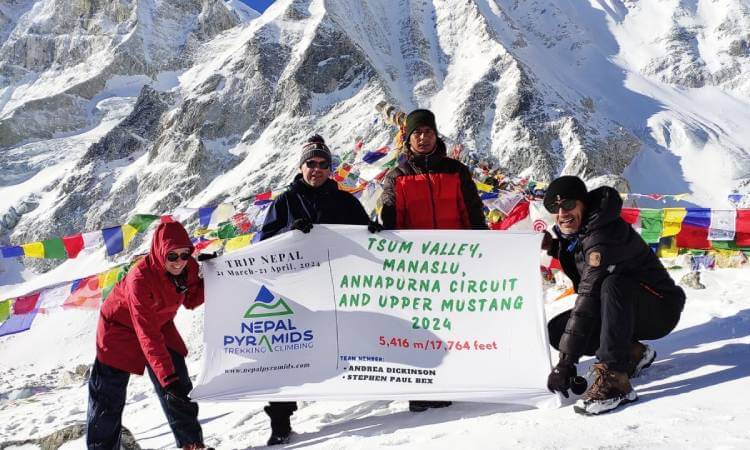
2) Annapurna Circuit + Tilicho Lake
The Basics:
- Duration: 16 - 18 days (combined)
- Max Elevation: 5,416m, Thorong La Pass
- Difficulty: Challenging to Strenuous
- Best Season: Spring (March - May), Autumn (September - November), and Winter (December - February).
- Special Permit Required: No, only ACAP (Annapurna Conservation Area Permit)
Why This Combination Works
Once the number one trekking destination in the world, the Annapurna Circuit Trek is the most famous long-distance trek. It is a classic loop around the Annapurna massif that passes through 5 different districts with a stunning range of landscapes. The combination goes from subtropical lowlands to alpine to arid Tibetan desert. The highlight is the glacial lake of Tilicho, the world's highest Lake, 4,919m, and crossing the Thorong La Pass at 5,416m.
This combination, with a side trip to Tilicho Lake, is very new, and it's getting lots of attention among the trekkers from around the world.
The Tilicho Lake detour also dramatically improves acclimatisation for the Thorong La crossing. Walking to the lake and back to the Annaapurna Circuit trail works as a 'walk high sleep low' principle, which acclimatizes you very well.
Cultural Highlights Along the Way:
The Annapurna Circuit, and its rewarding experiences:
- Pisang and Ngawal village: High-route villages with a traditional setting and stunning mountain views.
- Muktinath Temple: One of the most sacred pilgrimage sites in both Hinduism and Buddhism.
- Kagbeni: A medieval settlement, the gateway to Upper Mustang, with mythological legends.
- Marpha: A beautiful whitewashed village famous for its apple orchards.
This is the route for trekkers who are looking for an exciting Himalayan adventure with ample side trips every day.
Who Should Do This Route?
The Annapurna Circuit + Tilicho combination is ideal for those seeking a complete Himalayan package. It is for someone who seeks rich culture, stunning mountain views, and challenging high passes. If you have already been high and are looking for a little physically demanding trek, this is the one. The trails are well-marked, the teahouses are comfortable, and it is demanding without being too extreme.
Practical Tips
- Do not rush with your acclimatisation day if you want to enjoy both Tilicho and Thorong La Pass fully.
- The trail to Tilicho base camp and the lake is pretty tricky, so be cautious.
- A local guide is highly recommended, specifically for the Tilicho section.
- Jeep roads are now a part of the circuit trail, but you have the option to skip in most sections.
- A visit to Muktinath Temple and Marpha Village is highly recommended.
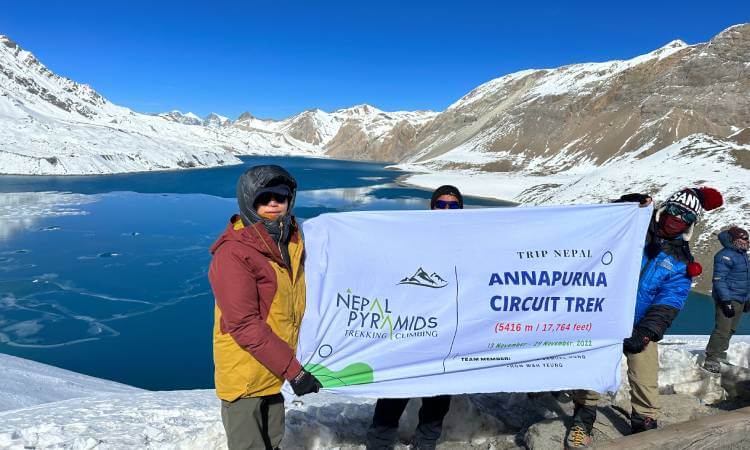
4) Annapurna Circuit + Nar Phu Valley
The Basics:
- Duration: 20 - 21 days (combined)
- Max Elevation: 5,320m, Kang La Pass
- Difficulty: Challenging to Strenuous
- Best Season: Spring (March - May), Autumn (September - November)
- Special Permit Required: Yes, Nar Phu Restricted Area Permit + ACAP
Why This Combination Works
The Annapurna Circuit is already one of the most popular and highly sought trek after Everest Base Camp. Adding Nar Phu Valley along with the Annapurna Circuit changes the trekking experience completely.
The hidden valley of Nar Phu is a split off from the Annapurna Circuit, which is one of the most untouched valleys that exists in Nepal. Getting to Nar Phu requires a special permit since it is a restricted area that never gets crowded. This raw valley has stayed largely untouched for ages.
The two main villages, Nar and Phu, sit above 4,000 metres, which is entirely cut off from the outside. It is a kind of valley where you actually feel far from everything, not just far from the maddening crowd.
The valley ends at Kang La Pass at 5,320 m, higher than Thorong La, and lands you at another gorgeous, hidden town of Ngawal. Gradually, we now follow the famous Annapurna Circuit Trail.
Cultural Highlights Along the Nar Phu:
The inclusion of the Nar Phu valley is where this combination really matters:
- The ancient village of Phu, 4,080 m. is one of the most visually striking settlements in all of Nepal.
- Tashi Lhakhang Monastery in Phu is hundreds of years old and still actively used by the local community
- Nar village is smaller but equally fascinating. The views of the surrounding peaks from here are extraordinary
- The deep gorge and the narrow canyon trails are the highlights of the region.
After the remote Nar Phu Valley, when you return to the Annapurna Circuit, the cultural richness continues delivering a different experience.
Who Should Do This Route?
This combination is for trekkers who are not interested in the standard Annapurna Circuit experience. It is for trekkers who want more remoteness, more culture, more wilderness, and fewer people.
The trek is suitable for those who are ok with long days of trekking and basic accommodation. It is also ideal for trekkers who want a restricted area experience without committing to any prominent or commercial trekking routes.
Practical Tips
- The Nar Phu permit must be arranged in advance through a registered agency.
- Independent trekking is not allowed. A local guide and a company are mandatory for Nar Phu.
- At Nar and Phu villages, teahouses are very basic, so be prepared.
- The Kang La Pass crossing is challenging, so we request not to attempt it in bad weather or without a local guide.
- A proper acclimatisation day is crucial.
3) Gokyo Lakes + Everest Base Camp
The Basics:
- Duration: 16 - 19 days (combined)
- Max Elevation: 5,545m, Kala Patthar (Everest viewpoint)
- Difficulty: Challenging
- Best Season: Spring (March - May), Autumn (September - November), and also Winter.
- Permit Required: Sagarmatha National Park Entry Permit + Khumbu Pasang Lhamu Rural Municipality Permit.
Why This Combination Works
Trekking to Everest Base Camp is one of the world's great journeys. Walking through the Khumbu Valley, passing through Namche Bazaar, visiting Tengboche Monastery, and standing at the foot of the world's highest mountain is certainly a profound experience.
However, in reality, the EBC trail over time is becoming overcrowded and fully booked, and that's where Gokyo Valley changes everything.
The trail to Gokyo Valley splits from the traditional EBC trail that leads you through a quieter, wilder landscape to the Gokyo Valley. The trail eventually leads you to a glacial lake, a series of sacred glacial lakes at altitudes between 4,700m and 5,000m. Besides, the trek takes you to Gokyo Ri (5,357m), a vantage point that gives you views better than Kala Patthar.
Combining Gokyo Lake and EBC via the Cho La Pass (5,420m) adds genuine adventure and variety to your expectations of the Khumbu region.
Cultural Highlights of this Trek:
The Gokyo + EBC combination also offers some of the richest Sherpa cultural experiences in Nepal:
- Namche Bazaar: The commercial and cultural hub of the Khumbu. A tourist hub with all the facilities. It is a place where Sherpa trade, gives you mountaineering history, and offers you Himalayan life.
- Gokyo: The quieter, less-visited alternative to EBC with the most dramatic landscape and beauty.
- Tengboche Monastery: The spiritual heart of the Khumbu, and the most important religious site in the entire Everest region.
- Pangboche Village: The oldest surviving Sherpa settlement in the Khumbu, with a monastery with Yeti remains.
- Dingboche and Pheriche: The last traditional Sherpa farming villages before the landscape turns purely alpine.
Who Should Do This Route?
This combination suits trekkers who want to do the EBC trek but at the same time want more than the standard trekking experience. It is for trekkers who are looking for a challenging trek in the Everest region, but without any technical climbing skills.
If your goal is EBC but you want to make the most out of it and explore the Khumubu region and the Sherpa culture, then yes. This combination is also for trekkers who want to get to EBC but want to skip the traditional trail and take the less crowded trail.
Practical Tips
- You will be crossing the Ngozumpa glacier, the longest glacier in the Himalayas, when you walk from Gokyo to Dragnag. Stay on marked trails.
- The Cho La Pass can be icy, so microspikes or crampons are crucial.
- Acclimatization days are to be taken seriously.
- If timing allows, Mani Rimdu at Tengboche is an experience that rivals the mountain views.
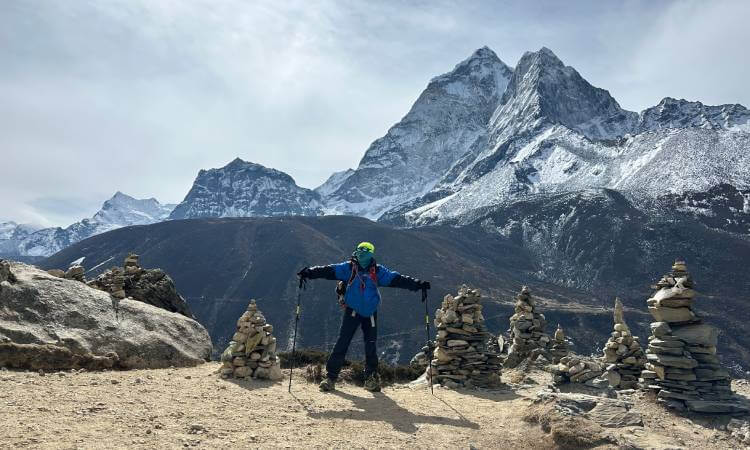
Why Hybrid Routes Are the Future of Nepal Trekking
The Hybrid Trekking in Nepal reflects a maturing understanding of what Nepal has to offer. Here is why Hybrid Routes are a more rewarding way to trek:
- These combinations immediately take you away from the crowds of the regular paths to the less crowded valleys.
- A hybrid route offers you the experiences within the same time frame, without having to do it twice.
- Hybrid Trekking Routes offer you better acclimatisation, cultural detours, and side trips, giving you extraordinary experiences at the same time.
- Besides, visiting less-visited remote areas brings economic activity to communities that benefits them directly.
- Hybrid routes give you enough time to understand the complex cultures of Nepal that we have under the ample ethnic groups.
Essential Preparation for Hybrid Treks in Nepal
Regardless of which combination you choose, certain preparation is crucial:
- Physical fitness: You don't need to be an athlete, but you do need a base level of fitness.
- Travel insurance: Make sure your policy covers high-altitude trekking (above 4,000m) and helicopter evacuation.
- Permits: Research permit requirements carefully. We organize everything before your arrival.
- Guides and porters: Always remember - a good guide opens cultural doors that no guidebook can.
- Seasonal timing: Spring (March - May) and autumn (September - November), now the Winter Season is trending.
- Leave No Trace: Carry out your waste.
Which One Should You choose?
The best hybrid trek is the one that matches your time, your fitness, your curiosity, and what you most want to carry home.
If you are looking for genuine Tibetan Buddhist culture and a pristine setting, then the Manaslu Circuit + Tsum Valley is awesome.
If you want a classic Nepal experience, then the Annapurna Circuit + Tilicho Lake will be an awesome pick.
If u fancy being at the base of the world's highest mountain with a bit of difference, then Gokyo Lakes + Everest Base Camp delivers exactly what you are looking for.