Restricted Area Permits and Costs Guide Nepal 2026/2027
Nepal has quite a good number of trekking regions that offer the most spectacular and culturally rich trekking experience in the world. However, they are termed 'Restricted Areas'.
If you are looking for an adventure in Nepal beyond the crowded trails of Annapurna and Everest, Restricted Areas will be an exceptional option.
The list of Restricted Areas in Nepal is:
| Restricted Area | Descriptive Title |
| Upper Mustang | 'The Forbidden Kingdom' / 'The Last Shangri-La' |
| Upper Dolpo | 'The Land of the Bon' / 'The Remote Hidden Paradise' |
| Manaslu | 'The Japanese Mountain' / 'The Borderland Circuit' |
| Tsum Valley | 'The Hidden Valley' / 'The Sacred Himalayan Pilgrimage Valley' |
| Nar Phu Valley | 'The Forgotten Valley' / 'The Hidden Kingdom of the Himalayas' |
| Kanchenjunga | 'The Sleeping Buddha' / 'The Eastern Frontier' / 'Five Treasures of the Snow' |
These are some of the prominent Restricted Areas in Nepal that are tightly controlled by the Nepalese government. All foreign nationals require a Special Permit, also known as a Restricted Area Permit (RAP), to enter these restricted zones. This Restricted Area Permit (RAP) is entirely different from standard national park entry fees. We will explain in detail about the RAP later in our blog post.
This guide will explain the new costs and new regulations for restricted area permits from 2026.
What Makes These Areas 'Restricted'?
The government of Nepal designates the above-mentioned regions as 'Restricted' to maintain a careful balance between tourism and its preservation. But Why? Here is why these areas are so tightly regulated and why they are termed 'Restricted'.
Border Security
These restricted areas lie along Nepal's northern border with Tibet (China), and some along the eastern border with Sikkim (India). These are sensitive border zones where the Nepal government is careful in managing for National Security Concerns. They strictly regulate the movement to prevent unregulated crossings.
Cultural Preservation
These restricted areas are home to ancient Buddhist communities. It is a heritage with a unique culture and traditions that have remained untouched for centuries. The residents of these regions practice traditions that are on the verge of extinction. They represent one of the last remnants of pre-Buddhist Tibetan culture. So the Nepal government doesn't want to damage these fragile Himalayan cultures with mass tourism. They want to preserve their historic cultural identities.
Environmental Sensitivity
Most significantly, the trans-Himalayan ecosystems of these restricted zones are exceptionally fragile. The region contains rare snow leopards, rare medicinal plants, and raw high-altitude wetlands that are vulnerable to mass tourism. By limiting visitors, the government of Nepal can maintain the natural beauty and biodiversity of these areas.
What is a Restricted Area Permit (RAP) or a Special Permit
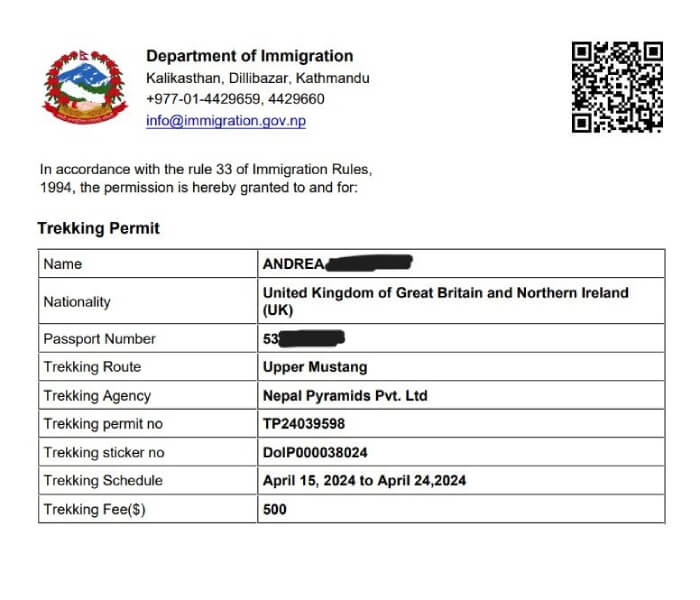
In simple terms, a Restricted Area Permit is a special government permission given to foreign travelers to trek in these protected areas of Nepal. You can think of it like a VIP Pass that you bought from the Nepal Government to travel to parts of Nepal that are off-limits to casual visitors.
These areas are near sensitive borders or home to fragile cultures and landscapes that the government wants to protect. However, you will receive a Special Approval to visit these places with the Restricted Area Permit.
A Restricted Area Permit (RAP) is different from a standard national park or conservation area permit:
- RAP is issued only by the Department of Immigration in Kathmandu, not the Nepal Tourism Board
- It can only be arranged through a government-registered trekking agency. There is no walk-in counter, and foreign trekkers cannot get the permit by themselves.
- A licensed guide and a registered local company are mandatory for every restricted area, no exceptions.
- Insurance is mandatory for both foreign trekkers and local crew members (the local company organizes the local crew insurance)
- Most restricted areas also require a separate permit for a national park or conservation area on top of that.
2026 Update: Solo Trekking is Now Allowed
. All restricted area permits were issued only to groups of two or more foreign trekkers. This rule of two mandatory trekkers was designed for the safety of the travelers in these remote, restricted areas. This rule made it difficult for the solo traveler who wanted to explore these restricted places. Either they had to give up the idea, or they had to find a friend, or join an unknown group just to secure the RAP permits.
On March 22, 2026, the Department of Immigration reformed the minimum-group requirement across all 15 restricted districts.
What does this mean:
- A single traveler can now easily get the RAP (Restricted Area Permit).
- What has not changed is that you still must trek with a licensed guide from a registered agency.
- Independent, guide-less trekking is still prohibited and applies to all Restricted Areas.
2026 Update: No More Fixed Minimum Days for Restricted Area Permits
Until late 2025, Restricted Area Permits (RAPs) had a Fixed Minimum Number of Days. This Minimum Number of Days ranged from 7 days to 10 days, and it didn't matter whether you needed them or not. Even if you only needed four or five days inside the zone, you were charged for a full 7 or 10 Minimum Number of Days upfront.
In any case, if you exceeded the Minimum Number of Days, you were charged separately for the additional number of days in USD. However, the 2026 reform removed this unnecessary fixed minimum number of days. All Restricted Area Permits are now issued based on the actual number of days you spend inside the restricted area.
Now, if your itinerary is a 3-day or 5-day trip, you will be charged accordingly. For example, especially for Upper Mustang and Upper Dolpo, there was a Fixed Minimum Number of 10-day requirement that cost USD 500 per person for the permit.
Now, with the new rule that was passed on the 22 of March 2026, the RAP for Upper Mustang and Upper Dolpo will be charged at USD 50 per day per person. You pay as per the number of days you spend inside the zone. This makes the restricted area in Nepal more affordable than it used to be.
Old Rule (until late 2025)
- You had to pay for a fixed minimum number of days, even if your trek was shorter.
- Example: For Upper Mustang or Upper Dolpo, there was a flat USD 500 fee covering the first 10 days, regardless of whether you actually needed all 10 days.
- Extra days beyond the minimum were charged separately, on top of the fixed fee.
New Rule (2026):
- No more fixed minimum number of days. You pay only for the number of days you spend inside the restricted zone.
- If you want to trek for just 3 or 5 days? Yo pay only for 3 or 5 days, calculating USD 50 per day.
- This makes trips short, individuals can now explore, and it has made the restricted area more affordable for all.
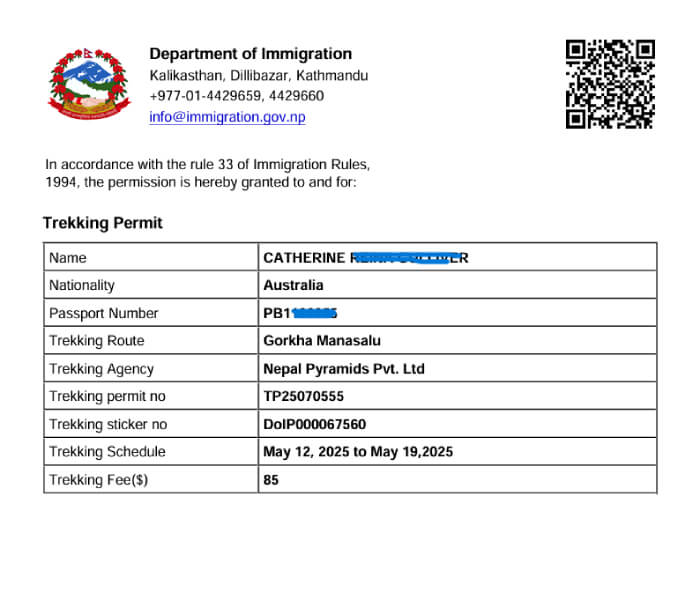
New RAP Permit Rule Example
| Upper Mustang Trip Length | Old Cost until 2025 | New Cost from 2026 |
| 5 Days (example: Jeep Safari) | USD 500 Flat | USD 250 |
| 7 Days | USD 500 Flat | USD 350 |
| 10 Days (Classic Trek) | USD 500 | USD 500 |
If you look at the above table, for the classic 10-Day Upper Mustang trek, the total cost is $500. But for shorter trips like jeep tours or quick cultural excursions, you pay as per your trip length due to the new 2026 rule.
However, note that since Upper Mustang falls under the Annapurna Conservation Area, the standard Annapurna Conservation Area Permit (ACAP) is required on top of the RAP. This ACAP currently costs NPR 3,000 (USD 22 - 25) for foreigners.
Restricted Area Permit Costs by Region from 2026
| Region | RAP Cost | Additional Permits Per Person |
| Upper Mustang | USD 50 or equivalent per day per person | |
| Upper Dolpo | USD 50 or equivalent per day per person | - Shey Phoksundo National Park Permit - NPR 3,000
|
| Lower Dolpo | USD 20/week + USD 5 per day or extra days | - Shey Phoksundo National Park Permit - NPR 3,000
|
| Manaslu Circuit | September - November USD 100 per person/week USD 15 per person/day (beyond 1 week) December - August USD 75 per person/week USD 10 per person/day (beyond 1 week) | - MCAP - NPR 3,000
- ACAP - NPR 3,000
- LOCAL MUNICIPALITY PERMIT - NPR 1,000
|
| Tsum Valley | September - November USD 100 per person/week USD 15 per person/day (beyond 1 week) December - August USD 75 per person/week USD 15 per person/day (beyond 1 week) | |
| Nar Phu Valley | September - November USD 100 per person/week USD 15 per person/day (beyond 1 week) December - August USD 75 per person/week USD 15 per person/day (beyond 1 week) | |
| Kanchenjunga | USD 20 per person/week (for the first 4 weeks) USD 25 per person/week ( beyond 4 weeks) | - KCAP: NPR 3,000 (Kanchenjunga Conservation)
|
| Humla | USD 50 per person/week USD 10 per person/day (beyond 1 week) | - KCAP: NPR 3,000 (Karnali Conservation)
|
A Worked Example: Manaslu Circuit 10-Day Itinerary, Autumn Season
- Manaslu Restricted Area Permit: USD 100 for the first week
- Extra days beyond 7 Days: 3 more days that will be 3 x USD 15 = USD 45
- Manaslu Conservation Area Permit (MCAP): NPR 3,000 (USD 22)
- Annapurna Conservation Area Permit (ACAP): NPR 3,000 (USD 22)
- Local Rural Municipality Permit: NPR 1,000 (USD 8)
So the approximate total permit cost for a 10-day Manaslu Circuit trek in the Autumn Season will be around USD 197 - 200 (permit only).
Documents Required for Restricted Area Permit (RAP)
Restricted Area Permits (RAP) are issued by the Department of Nepal Immigration, and it is issued only through a registered local trekking agency. Individual trekkers cannot apply directly. Being a legally registered trekking and climbing company, Nepal Pyramids handles the process of RAP on your behalf.
- Passport (valid for a minimum of 6 months): Your passport must have at least 6 months of validity remaining from your trek start date.
- Passport-size photographs: Recent passport-size photos (white background) are needed.
- Travel Insurance (PDF copy): A digital copy of your travel insurance policy must be submitted in PDF format. This is a mandatory requirement for restricted-area trekking.
- On-Arrival Visa Submission ID: After applying for the On-Arrival Visa online form, you need to provide the submission/reference ID to your Travel Agency.
- Nepal Staff Details: The RAP permit application also requires the full details of the assigned Nepali staff. The guide' name, license number, and citizenship information are mandatory, and it is the responsibility of the local company.
- Staff Insurance: Along with the staff details, proof of insurance coverage for the accompanying Nepali guide/staff is also submitted by the company.
Note: All of the above documents are collected by Nepal Pyramids in advance of your trek. Based on the provided details, we will apply for and process the RAP, and it will be ready by the time you arrive in Kathmandu.
Frequently Asked Questions
Can I trek solo in a restricted area now?
Yes, as of March 22, 2026, the two-trekker minimum requirement has been removed from restricted areas. This basically means you will obtain the permit as a solo traveler, but you still need a licensed guide and a registered local company. You cannot independently trek in the area all by yourself.
Is Upper Dolpo now $50/day like Upper Mustang?
Yes, it is.
Are restricted area permit fees refundable if I cut my trek short?
No. These are non-refundable, non-transferable, and valid for a single entry only.
Do children need a Restricted Area Permit?
Yes, unlike conservation area and national park permits, restricted area permits apply to all ages, with no exemption for children.
Can I apply for a restricted area permit myself online?
No, restricted area permits must be processed through a registered trekking agency, and it is issued by the Department of Immigration.
Do I still need TIMS in restricted areas?
No, the Restricted Area does not require a TIMS card.