Complete Cost Breakdown of Everest Base Camp Trek:
Your Ultimate 2026-2027 Budget Guide for the World's Most Iconic Trek
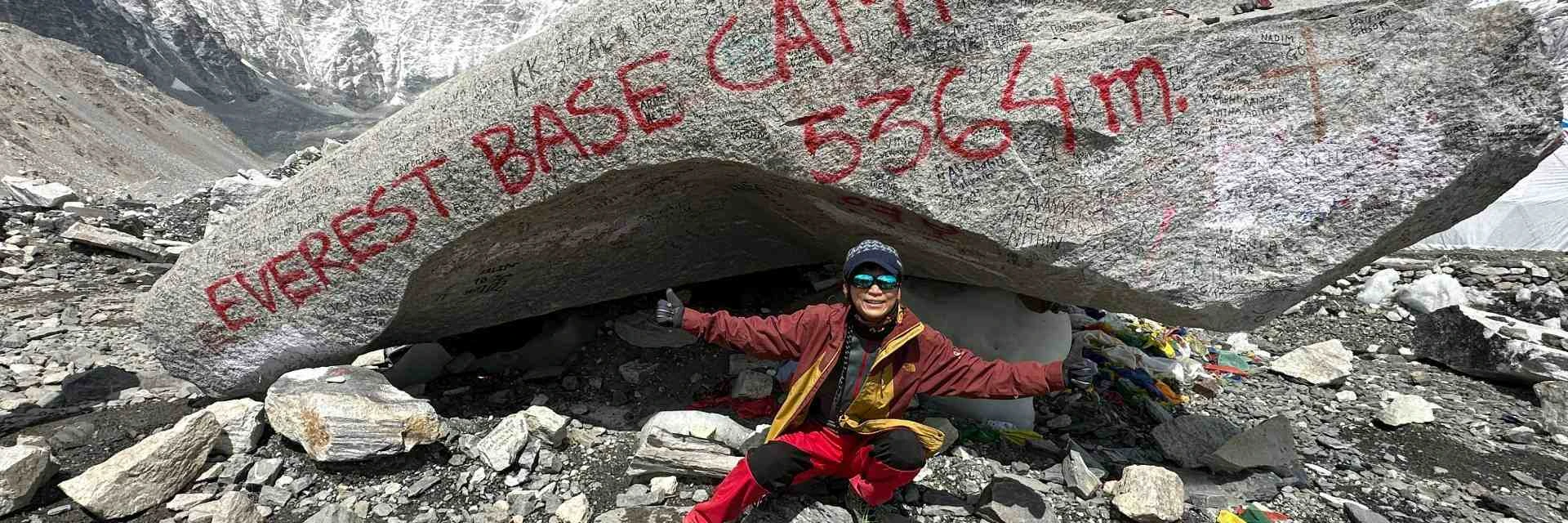
Are you planning for the Everest Base Camp trek? Trek to EBC is certainly a dream of millions of adventurers from around the world. It is once in a life time experiece to stand at 5,364 meters, the base of the world's highest mountain under the shadow of Everest. Being at a place surrounded by the raw beauty of the Khumbu region is nothing but a life-changing experience. Whether you are a seasoned mountaineer or a first-time trekker, one of the most practical questions that arises is How much does the Everest Base Camp trek cost?
The honest answer? It depends on more factors than most travel blogs will tell you. Your total EBC trek budget is shaped by everything from the trekking agency you choose and the style of SERVICE you prefer, to the season you travel in. Furthermore, the quality of accommodation, the quality of your gear, and even how much you tip your Sherpa guide and porter make a difference.
A solo budget trekker staying in basic teahouse accommodation and booking through a local Nepal-registered trekking agency might spend as little as $1,200 to $1,800. While a traveler seeking a premium, fully guided experience with luxury lodges, international agency support, and premium gear could spend upward of $3500 to $6,000 or more.
NOTE: What doesn't change, regardless of budget, are the two-way Lukla flight fees, expensive bottled water at altitude, WiFi charges at teahouses, and mandatory trekking permit fees, which are necessary costs that every trekker must pay before setting foot on the trail.
Then there's the matter of safety. High-altitude trekking insurance that covers emergency helicopter evacuation. In this comprehensive Everest Base Camp trek cost breakdown, we cover every single expense you can realistically expect.
What we cover here:
- International flights to Kathmandu
- Domestic flights to Lukla,
- Trekking permits,
- guide and porter fees,
- teahouse food costs,
- gear and equipment,
- travel insurance, and
- all the hidden costs that most travel blogs conveniently forget to mention.
We also break down costs by budget from mid-range and premium, so you can plan a trek that fits your lifestyle, not just your bank account.
Quick Facts:
| Trek Detail | Information |
| Best Season | March-May and Sept-November (also winter) |
| Trek Duration | 14 - 16 Days |
| Max Altitude | 5,364 meters / 17,598 feet (Kala Patthar is 5545m) |
| Guide Required | Yes (mandatory since 2023 theoretically) |
| Insurance | Mandatory (helicopter evacuation coverage) |
| Permit Cost | $70 (all permit combines) |
| Budget Range | $1,200 to $6000+ |
1. Everest Base Camp Trek Cost Overview: Budget Summary
Before diving into each expense category, here's a high-level snapshot of what trekkers typically spend on the EBC trek:
| Budget Type | Estimated Total Cost (USD) | Best For |
| Budget Trek | $,1200 - $1,800 | Solo, Independent Trekker |
| Mid-Range Trek | $2,000 - $3,500 | Small Group, Guided Trek |
| Premium Trek | $3,500 - $6,000+ | Luxury lodges, full service (heli may include) |
These figures cover all expenses from Kathmandu to Kathmandu and back, including flights, permits, accommodation, food, guide, porter, gear, and emergency insurance. Let's break these down category by category.
2. Flights to Nepal Cost: Getting to Kathmandu
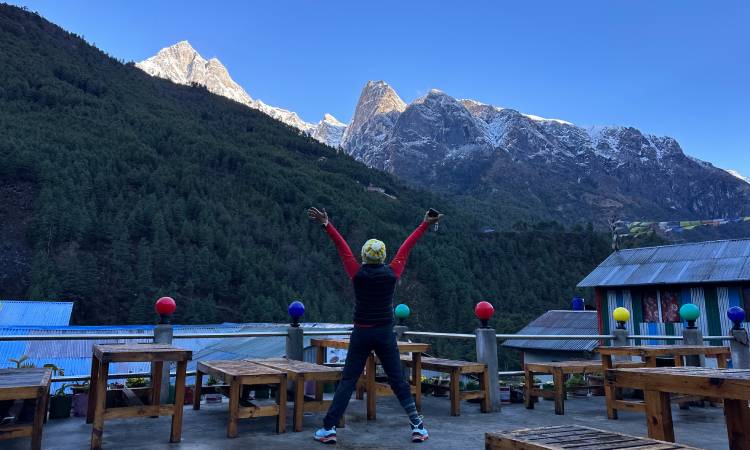
Your Everest Base Camp trek budget begins long before you land in Nepal. International airfare to Kathmandu (Tribhuvan International Airport) varies significantly by departure country and booking timing.
| Departure Region | Round-Trip Airfare (USD) | Best Booking Window |
| USA / Canada | $700 - $1,400 | 3-5 months in advance |
| UK / Europe | $500 - $1,000 | 2-4 months in advance |
| Australia | $600 - $1,100 | 3-5 months in advance |
| India | $100 - $250 | 1-3 months in advance |
| Middle East / SE Asia | $300 - $700 | 1-3 months in advance |
Pro Tip: Book flights through hubs like Doha (Qatar Airways), Dubai (Emirates), or Bangkok (Thai Airways) for the best connections to Kathmandu at lower prices.
3. Lukla Flights Cost: The Gateway to Everest
Most Everest Base Camp trekkers fly from Kathmandu to Lukla (Tenzing-Hillary Airport), the starting point of the classic EBC route. This is one of the most thrilling — and most important — costs to budget for.
| Route | Cost (USD) - One Way - Per Person | Notes |
| Kathmandu - Lukla (Shared Flight) | $200 - $220 | Standard Tourist Option |
| Ramechhap - Lukla (Shared Flight) | $150 - $180 | Used during the peak season |
| Helicopter Option | $500 - $800 pp | In case of Flight Cancellation |
| SAAR Country Nationals | $125 - $140 | Only for SAARC Nationals |
| Local (Nepali Citizen) | $50 - $80 | |
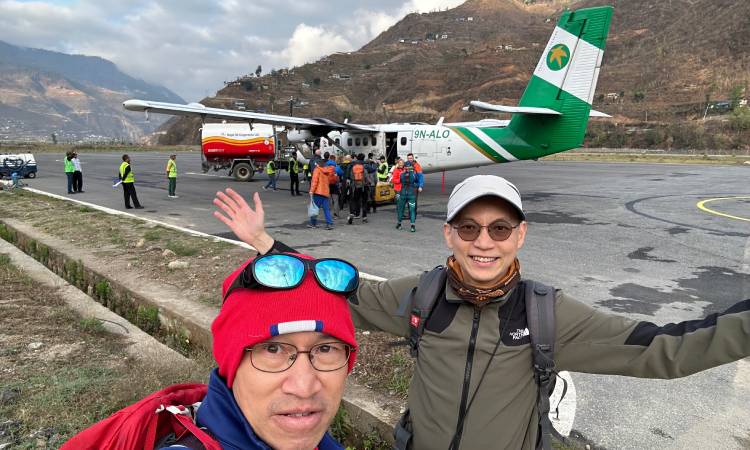
NOTE: During peak seasons (March-May, Oct-Nov), flights from Ramechhap airport (about 5 hours' drive from Kathmandu) are used to reduce congestion. Budget an additional $25 - $40 for the taxi/jeep from Kathmandu to Ramechhap.
4. Trekking Permits Cost for Everest Base Camp Trek:
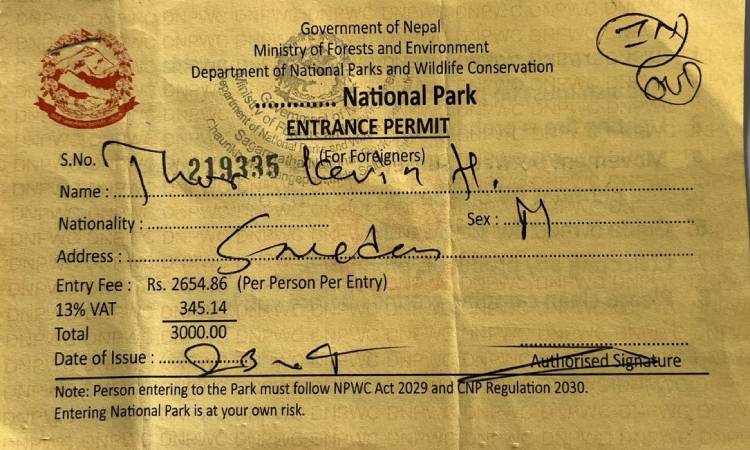
All trekkers entering the Khumbu region are required to obtain multiple official permits. These are non-negotiable costs and must be budgeted carefully.
| Permit Type | Cost (USD) | Where to Obtain |
| Sagarmatha National Park Entry | $30 | Kathmandu Tourism Board / Monjo Chekpoint |
| Khumbu Pasang Lhamu Rural Municipality | $30 | Lukla Checkpoint |
| TOTAL PERMIT COST | $60 | All Mandatory |
These permits are checked multiple times along the trail, so always keep them accessible. Permit fees are subject to annual revision by the Government of Nepal, so check current rates before your trek.
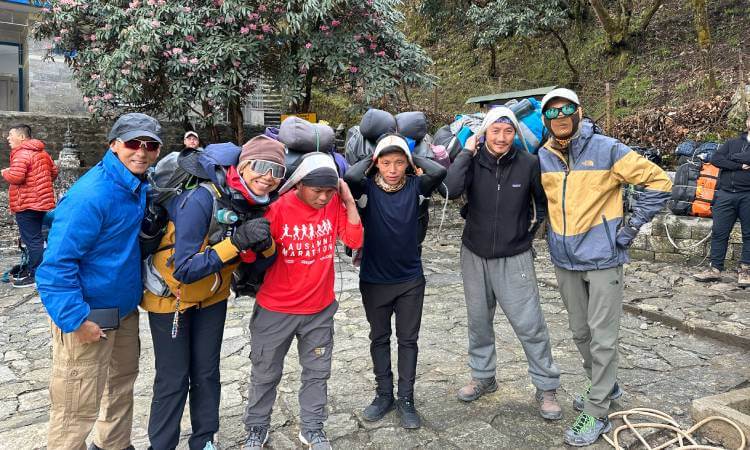
5. Trekking Guide and Porter Costs:
Hiring a licensed guide and porter is strongly recommended. It is crucial for both safety and to support the local economy. Here's what to expect:
a) Trekking Guide Fee:
| Guide Type | Daily Wage Rate (USD) | Whats Included |
| Licenced Local Guide | $25 - $40 / Day | safe, navigation, and translation |
| Professional Senior Guide | $40 - $60 / Day | Full Service + Safety |
| Agency-Provided Guide | Included in the Package | Trained, qualified, full service |
b) Porter Fee:
| Porter Type | Daily Wage Rate (USD) | Weight Limitation |
| Standard Porter | $20 - $25 / Day | Up to 25 kg per porter |
| Porter-Guide (combo) | $30 - $40 / Day | Up to 15/20 kg + Guiding |
IMPORTANT: Always treat your porter humanely and give a tip (10 / 15% of their total wages is customary). These additional costs add approximately $10 - $20 per day per person.
EXAMPLE: For a 14-day trek, a guide + porter combination will typically cost $700 - $1,100 all-inclusive with tips.
6. Trekking Agency Package Costs
If you prefer a structured experience, trekking agencies in Kathmandu and international operators offer all-inclusive packages. Here's what different price tiers typically include:
| Package Type | Cost Per Person (USD) | What's Included |
| Budget Trek (Local Agency) | $800 - $1,200 | Guide, porter, permits, teahouse B&B |
| Mid Range (Local Agency) | $1,800 - $2,500 | All of the above + meals, transfers, hotel, flights (full package) |
| Premium / International | $3,500 - $6,000+ | All of the above + luxury lodges, and airport pickup/drop off etc |
| Helicopter Return Trek | $3000 - $4500 | Full Package guided trek with Heli return to Kathmandu from Gorak Shep |
7. Accommodation Costs on the EBC Trek:
The Everest Base Camp trail is well-equipped with teahouses (lodges) at every major stop. Accommodation quality and price increase significantly at higher altitudes.
| Altitude Zone | Key Settlements | Teahouses Costs (USD/ per night) |
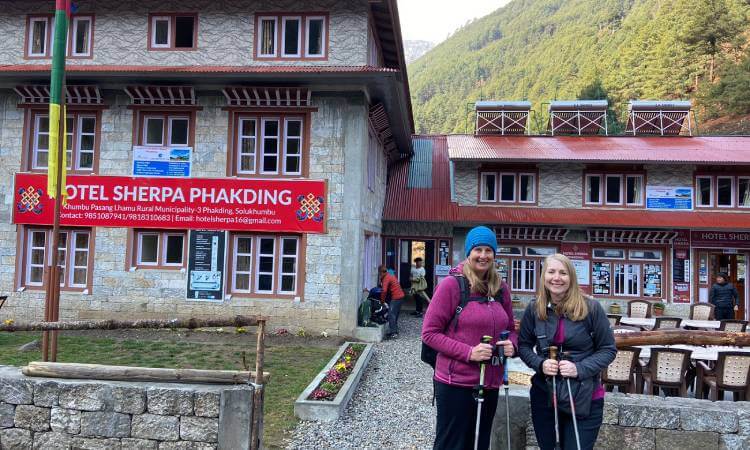
| Low Altitude (2,800-3,400m) | Lukla, Phakding, Namche Bazaar | $5 - $15 |
| Mid Altitude (3,400-4,500m) | Tengboche, Dingboche | $8 - $20 |
| High Altitude (4,500-5,300m) | Lobuche, Gorak Shep, Gokyo | $10 - $25 |
| Premium Lodge Option | Lukla, Monjo, Namche, Debuche, Gokyo, Kongde etc | $100 - $290+ |
Most basic teahouses offer a room with two twin beds, a shared bathroom, and a common dining area. Rooms are typically cheap (or sometimes even free) if you eat your meals at the lodge, a common practice on every trekking trail in Nepal. Budget trekkers should plan on $5 - $10 per night for teahouse accommodation.
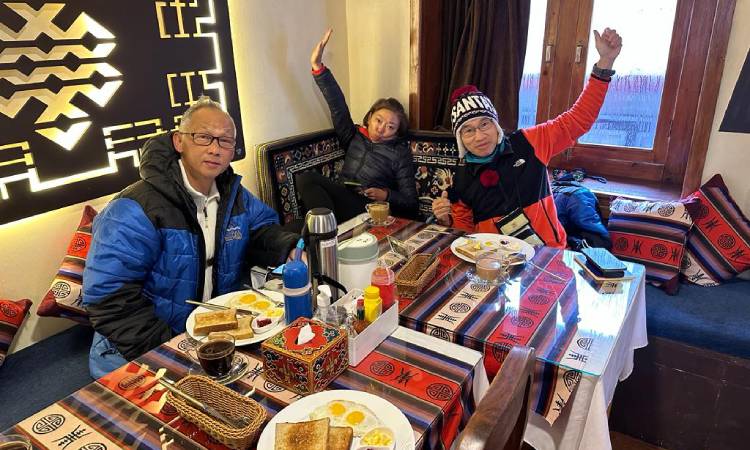
8. Food and Water Costs Along the Trail:
Food is one of the most variable and important costs on the Everest Base Camp trek. Prices rise significantly with altitude, and staying hydrated at high elevation is essential.
| Meal / Item | Lower Altitude (USD) | Higher Altitude (USD) |
| Dal Bhat (set meal) | $5 - $7 | $9 - $14 |
| Pasta / Noodle Dish (Lunch) | $4 - $6 | $8 - $12 |
| Breakfast (eggs, toast, porridge) | $3 - $5 | $6 - $9 |
| Snickers / Energy Bar | $1 - $2 | $3 - $5 |
| Hot Tea (coffee, masala tea, ginger tea, etc) | $1 - $3 | $2 - $5 |
| Boiled Water (Per Cup) | $1 - $2 / $5 - $7 thermos | $1 - $2 / $5 - $10 thermos |
| Mineral Water | $2 - $3 | $3 - $6 |
Money-Saving Tip: Carry a water purification tablet or a SteriPen and fill from natural sources to avoid buying expensive bottled water at high altitudes. This alone can save $100 - $150 over the trek.
Daily food, water, and hot beverage budget: $30 - $35 at lower altitudes, $40 - $60 at higher altitudes.
9. Travel Insurance Cost for Everest Base Camp Trek:
Travel insurance for the Everest Base Camp trek is not optional — it's absolutely essential. Standard travel insurance does NOT cover high-altitude trekking. You need a dedicated adventure/altitude policy that specifically covers:
- High-altitude trekking above 5,000 meters (EBC sits at 5,364m)
- Emergency helicopter evacuation (can cost $5,000–$15,000 without insurance)
- Medical treatment and hospitalization
- Trip cancellation and delay coverage
- Gear and baggage loss
| Insurance Provider | Estimated Cost (USD) | Coverage |
| World Nomads (Explorer) | $80 - $150 for 2/3 weeks | Up to $500K evacuation |
| Safety Wing | $50 - $100 for 2/3 weeks | Good base coverage |
| IMG Global (iTrekking) | $90 - $140 for 2/3 weeks | Up to 7,000m altitude |
| True Traveller (Explorer Plan) | $90 - $160 for 2/3 weeks | Up to £10M medical, helicopter evacuation up to 6,500m |
Budget approximately $80–$200 for comprehensive high-altitude trekking insurance.
10. Kathmandu Costs: Before and After the Trek
Most trekkers spend 2–3 nights in Kathmandu before the trek and 1–2 nights after. Here's what to budget:
| Expense | Budget (USD) per person | Mid- Range (USD) per person |
| Accommodation (per night) | $8 - $20 | $40 - $120 |
| Meals per day (Lunch and Dinner) | $10 - $20 | $25 - $60 |
| Sightseeing (Pashupatinath, Boudhanath, etc. entrance + taxi + guide) | $20 - $30 | $40 - $80 |
| Nepal visa on arrival (most countries) | $30 (15 Days), $50 (30 Days) | SAME |
| Airport taxi / transport | $8 - $15 | $15 - $20 |
11. Hidden and Miscellaneous Costs while doing the EBC Trek:
Experienced trekkers know that the devil is in the details. Here are often-overlooked costs that can add up quickly:
- WiFi charges: $2 - $5 per hour, or $5–$15 for a daily pass in teahouses
- Phone charging: $1 - $3 per charge (higher at altitude)
- Hot shower: $2 - $5 per shower (Gas or geyser at lower altitude, rest is solar-heated, not always guaranteed)
- Yak bag transfer (Namche to EBC): $30 - $50 for extra luggage storage
- Extra Porter in any case: $25 per day
- Horse on hire: $100 - $150 per destination.
- Monastery entry fees: $10 - $20 (Tengboche, Thyangboche, etc.)
- Tips for guides and porters: $100 - $200 total (standard practice)
- Emergency medication (Gamow bag, oxygen): Rare but $50 - $200 if needed
- Satellite communication device (SPOT/Garmin): $15 - $30 rental per trek
- Souvenirs and shopping: $20 - $100+
Allow $150 - $300 as a miscellaneous buffer in your Everest Base Camp trekking budget to cover unexpected expenses.
12. Complete Everest Base Camp Trek Cost Summary Table:
Here is your full EBC trek cost summary, broken down by budget type:
| Expense Category | Budget in USD | Mid-Range Budget in USD | Premium Budget in USD |
| International Flights | $500 - $800 | $800 - $1,200 | $1,200 - $2,000 |
| Kathmandu-Lukla Flight | $360 - $440 | $360 - $440 | $360 - $440 |
| Nepal Visa | $30 - $50 | $30 - $50 | $30 - $50 |
| Trekking Permits | $50 - $60 | $50 - $60 | $50 - $60 |
| Trekking Package / Guide | $800 - $1,300 | $1,800 - $2,500 | $3,500 - $6,000 |
| Accommodation (14 nights) | $70 - $140 | $150 - $350 | $1,000 - 3,000 |
| Food and Water | $350 - $500 | $500 - $800 | $7,50 - $1,200 |
| Travel Insurance | $80 - $120 | $120 - $200 | $150 - $300 |
| Gear And Equipment | $150 - $300 | $300 - $600 | $600 - $1,500 |
| Kathmandu Cost | $100 - $150 | $200 - $400 | $400 - $800 |
| Miscellaneous | $150 - $200 | $200 - $300 | $300 - $500 |
| TOTAL APPROX. ESTIMATED COST | $2,600 - $4,000 | $4,200 - $6,800 | $8,200 - $16,000 |
NOTE: The budget column assumes a local agency package, teahouse accommodation, and minimal extras. The premium column includes international agency packages with luxury lodges and full service.
13. Best Time to Trek and How Season Affects Everest Base Camp Trek Cost:
Timing your Everest Base Camp trek affects not just your experience, but your overall costs:
| Season | Months | Cost Impact | Trek Conditions |
| Spring (Peak Season) | March-May | Highest prices, early booking needed | Possibility of best weather, can be crowded |
| Summer/Monsoon | June-August | Possibility of discount rates, 15-20% discounts | Heavy rain, leeches, landslides, poor visibility |
| Autumn (Peak Season) | September-November | High prices, popular season | Clear skies, great stable weather |
| Winter (trending) | December-February | Budget-friendly, fewer trekkers, but getting trendy | Very promising weather, but it can be Cold (-20°C at night), snow |
March-May and September-November are peak seasons when flight and teahouse prices are highest, but the trails are safest and most scenic. If you are flexible, October and November offer the golden combination of post-monsoon clarity and reasonable rates.
14. Money-Saving Tips for the Everest Base Camp Trek:
Here are proven strategies to reduce your Everest Base Camp trek cost without compromising safety:
- Booking through a Kathmandu-based Local Agency rather than an international operator can save $1,000 - $3,000.
- Trek during off season, like winter in December - February, for significant discounts on teahouses and packages.
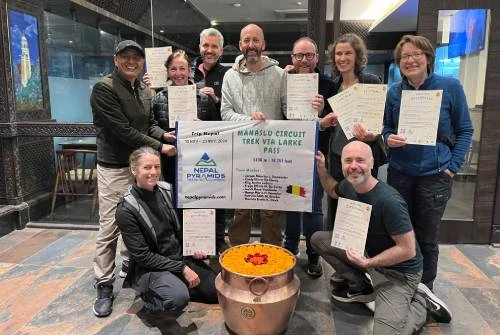
- Rent gear in Kathmandu's Thamel or go with a company that provides hassle-free treks like Nepal Pyramids Trekking and Climbing.
- Order Dal Bhat rather than other variations since it comes with unlimited refills and provides the best caloric value per dollar on the trail.
- Avoid bottled water and carry purification tablets, as it saves $3 - $5 per day.
- Avoid Solo Traveling and always travel in a group since sharing costs reduces per-person expenses significantly.
- Find reasonable priced insurance company that would cover evacuation medical expenses.
Is the Everest Base Camp Trek Worth the Cost?
Absolutely, the Everest Base Camp trek is one of the most transformative experiences a person can have. Standing at 5,364 meters, the base of the world's highest peak, surrounded by mighty peaks and the iconic Khumbu Icefall, is an experience of a lifetime.
Use this complete Everest Base Camp trek cost breakdown as your financial roadmap and start saving for the adventure of a lifetime.
Frequently Asked Questions
Q: What is the minimum budget for the Everest Base Camp trek?
A: The absolute minimum for a safe, fully permitted trek with a guide is around $1,200–$1,500 from Kathmandu, excluding international flights. Budget trekkers who rent gear and book locally can achieve this cost.
Q: Can I do Everest Base Camp without a guide?
A: As of 2023, solo trekking without a licensed guide is illegal in Nepal for foreign nationals. You must hire a guide through a registered trekking agency. However, in the Everest region, individual and solo trekkers are still permitted to trek without being affiliated with a company or accompanied by any local guide.
Q: How many days does the Everest Base Camp trek take?;
A: The classic EBC trek takes 12 - 16 days round trip from Lukla, including essential acclimatization days. Rushing the itinerary increases the risk of altitude sickness.
A: With proper preparation, acclimatization, a licensed guide, and good travel insurance, the EBC trek is safe for physically fit trekkers with no prior mountaineering experience. The primary risk is acute mountain sickness (AMS), which is manageable with a proper itinerary.
Q: What currency should I carry on the EBC trek?
A: Carry Nepali Rupees (NPR). USD is accepted in some Namche Bazaar shops and larger teahouses, but again you may not get the real dollar value. However, having local currency is essential for smaller villages. ATMs are available in Namche Bazaar (4–6 hours into the trail from Lukla) and also in Lukla but can be unreliable — withdraw enough cash in Kathmandu before you start.
Ready to Plan Your Everest Base Camp Trek?
Use this guide as your starting point, get at least 3 quotes from Nepal-registered trekking agencies, and make sure your travel insurance covers helicopter evacuation above 5,000m.