Both Mera Peak and Island Peak fall into this category, making them the most popular choices for climbers attempting their first 6,000-meter summit. But here's what makes them different:
Quick Comparison: Mera Peak vs Island Peak
| FEATURE | MERA PEAK | ISLAND PEAK |
| Altitude | 6,476m / 21,247 feet | 6,189m / 20,305 feet |
| Duration | 12-21 Days | 16-20 Days |
| Technical Difficulty | Alpine Grade PD (Non-technical) | Alpine Grade PD+ (Moderate technical) |
| Skills Required | Basic crampon use, ice axe | Jumar, abseil, fixed ropes, steep ice climbing |
| Typical Cost | $2,500 - $3,500 | $2,200 - $3,200 |
| Best For | First 6000m+ peak, altitude experience | Technical skill development, EBC combo |
Mera Peak: Nepal's Highest Trekking Peak (6,476m / 21,247 feet)
Location and Geography
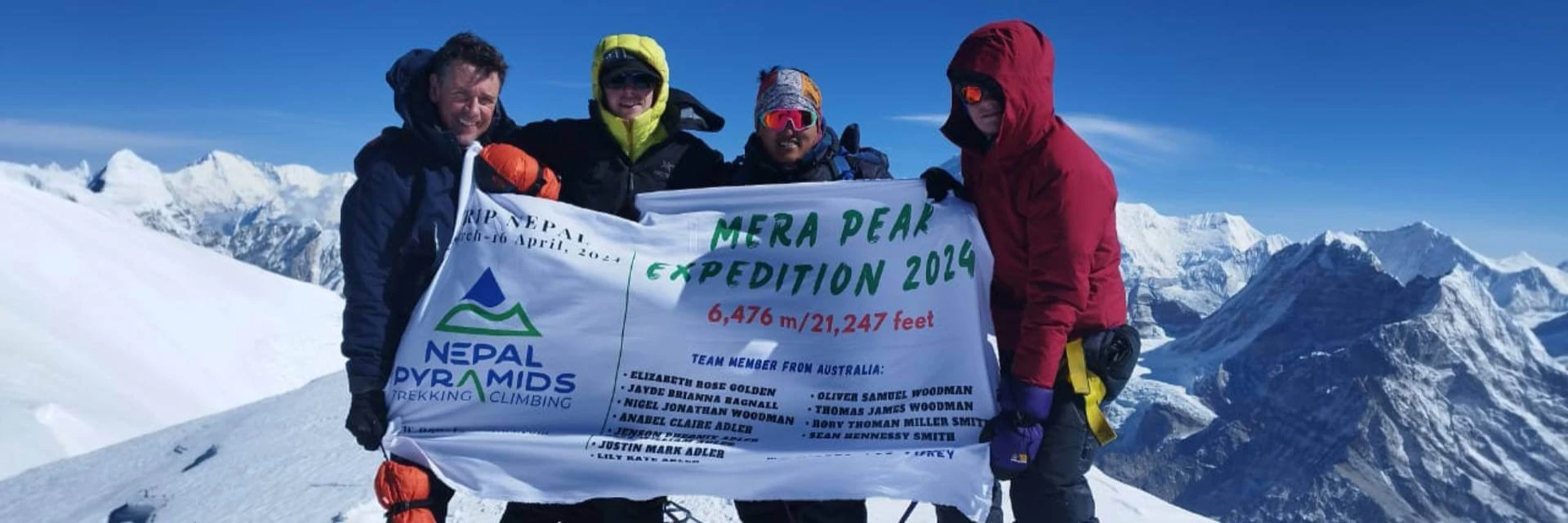
Mera Peak stands proudly in the remote Hinku Valley of the Makalu-Barun National Park in eastern Nepal. Unlike Island Peak, which sits along the popular Everest Base Camp trail, Mera offers a journey into wilderness and solitude. The peak has three summits: Mera North (6,476m, the highest), Mera Central (6,461m), and Mera South (6,065m). However, most commercial expeditions target Mera Central due to its accessibility and safety.
The trek to Mera Base Camp is approximately 65 kilometers from Lukla, passing through dense rhododendron forests, traditional Sherpa villages like Chutanga and Kothe, and eventually into high-altitude alpine meadows and glacial terrain. The isolation means fewer tea houses, more basic facilities, and a genuine wilderness experience.
Why Mera Peak is Considered 'Easier' Technically
Mera Peak is classified as Alpine Grade PD (Peu Difficile - a little difficult), which translates to a non-technical snow climb. Here's what that means in practical terms:
- Summit Day is Long but Straightforward: The final push from Mera High Camp (5,800m) to the summit involves 8-12 hours of steady glacier walking on moderately angled snow slopes (typically 25-35 degrees). No vertical ice walls, no exposed rock scrambling, no technical rope work required.
- Basic Equipment Skills Needed: You'll need to be comfortable using crampons (metal spikes on boots for ice traction) and an ice axe for balance and self-arrest. Most operators provide comprehensive training at base camp.
- Minimal Fixed Rope Sections: Unlike Island Peak's extensive fixed rope systems, Mera has short sections of rope only in potentially crevassed areas or steeper slopes. Most of the climb is simply walking uphill on snow.
- No Abseiling/Rappelling Required: Descent is by the same route you ascended—no need for technical rappelling skills.
The Physical Challenge: Altitude is the Main Enemy
While Mera lacks technical difficulty, it's physically demanding and altitude-intensive. At 6,476m, you're in the extreme altitude zone where oxygen levels are about 50% of sea level. The challenges include:
- Summit Day Endurance: 8-12-hour days starting around midnight (alpine starts to avoid afternoon snow conditions). You'll be walking in freezing temperatures (-20°C to -30°C with wind chill) with a heavy pack.
- Trek Approach is Harder: The trek to Mera Base Camp involves significant elevation gain and loss, including crossing multiple passes like Zatrwa La (4,600m). It's tougher on the legs than Island Peak's approach.
- Proper Acclimatization is Critical: The itinerary should include at least 2 nights at Khare (4,950m) and 2 nights at Mera Base Camp (5,350m) before attempting the summit. Rushing increases altitude sickness risk dramatically.
- Weather Exposure: Mera is more exposed to high winds and extreme cold compared to Island Peak. Frostbite risk is higher, especially on summit day.
The Spectacular Mountain Views from Mera Peak
One of Mera Peak's biggest draws is the panoramic view from the summit—arguably one of the best in Nepal. On a clear day, you'll witness five of the world's fourteen 8,000-meter peaks:
- Mount Everest (8,848m) - Chomolungma, the roof of the world
- Lhotse (8,516m) - The world's fourth-highest mountain
- Cho Oyu (8,188m) - The 'Turquoise Goddess.'
- Makalu (8,485m) - The isolated pyramid peak
- Kanchenjunga (8,586m) - The world's third-highest peak (visible on clear days)
The 360-degree panorama also includes Ama Dablam, Nuptse, Chamlang, and the stunning Hinku Valley glacier system. Unlike Island Peak, where you're close to massive peaks, Mera offers a distance perspective, but the entire Himalayan wall spreads before you.
Island Peak (Imja Tse): The Technical Challenge (6,189m)
Location and Accessibility
Island Peak, officially named Imja Tse, sits in the heart of the Khumbu region within Sagarmatha National Park, a UNESCO World Heritage Site. Its nickname 'Island Peak' comes from its appearance—when viewed from Dingboche, it resembles an island amid a sea of ice. The peak was first climbed in 1953 by a British expedition team, including Tenzing Norgay, as preparation for their Everest attempt.
The major advantage of Island Peak is its location along the classic Everest Base Camp trekking route. This means well-established tea houses, comfortable lodges, better food options, vibrant Sherpa culture in villages like Namche Bazaar and Dingboche, and most importantly, better access to emergency medical facilities and helicopter rescue services. The trek from Lukla to Island Peak Base Camp is approximately 40-47 kilometers, depending on your route.
Why Island Peak is 'More Technical'
Island Peak is classified as Alpine Grade PD+ (a step above Mera), requiring moderate technical mountaineering skills. Here's what makes it technically demanding:
- The Infamous Headwall: The crux of Island Peak is a near-vertical 45-50 degree ice and snow headwall just below the summit. Climbers must ascend this using fixed ropes, jumars (mechanical ascenders), and ice axe techniques. This section is physically exhausting and psychologically intimidating for first-timers.
- Glacier Crossing with Crevasse Hazards: The approach from High Camp involves navigating crevassed glacier sections, requiring rope teams and careful navigation.
- Narrow Summit Ridge: After the headwall, you traverse a narrow snow ridge to the summit—exposed on both sides with significant drop-offs. Requires confidence and balance.
- Abseiling (Rappelling) on Descent: Coming down the headwall requires abseiling using a figure-8 descender or similar device—a skill that must be practiced beforehand.
- Technical Equipment Proficiency Required: You must be comfortable and competent with crampons, ice axes, jumars, prusiks, harnesses, carabiners, and rope systems. Pre-climb training at base camp is essential.
Easier Trek, Harder Summit
Interestingly, while Island Peak's summit push is technically harder, the trek to base camp is easier compared to Mera. The Everest Base Camp trail is well-maintained, gradual, and dotted with comfortable lodges. You'll follow the classic route: Lukla → Namche Bazaar → Tengboche → Dingboche → Chhukung → Island Peak Base Camp.
This makes Island Peak ideal for climbers who want to experience iconic Himalayan culture (Namche's Saturday market, Tengboche Monastery, Sherpa hospitality) while building up to a challenging summit. The trade-off is that you'll share the trail with many trekkers—solitude seekers may find it crowded during peak seasons.
The Close-Up Mountain Views
From Island Peak's summit, you won't see five 8,000m peaks like Mera, but what you will see is breathtaking intimacy with Himalayan giants:
- Lhotse's South Face: A massive vertical wall of ice and rock towers directly in front of you—one of the most dramatic mountain faces on Earth.
- Ama Dablam: The 'Matterhorn of the Himalayas' stands elegantly in the distance, often considered the most beautiful mountain in Nepal.
- Nuptse and Makalu: Additional giants frame the horizon.
- Mount Everest: While visible, Everest appears smaller from Island Peak due to perspective—Lhotse dominates the view.
The perspective is different from Mera—instead of a distant panorama, you feel surrounded by colossal walls of ice and rock. It's an immersive, almost overwhelming experience.
Head-to-Head Comparison: Making Your Decision
1. Difficulty Level: Technical Skills vs Physical Endurance
Mera Peak is physically harder but technically easier. If you're a strong trekker with excellent cardiovascular fitness but limited mountaineering experience, Mera is ideal. The challenge is endurance, altitude tolerance, and mental stamina during long summit days. Think: ultra-marathon in thin air.
Island Peak is technically harder but slightly less physically demanding due to its lower altitude. If you have rock climbing or mountaineering experience (even basic indoor climbing), enjoy technical challenges, and want to develop alpine skills, Island Peak is the better choice. Think: vertical problem-solving in extreme conditions.
2. Best Season for Climbing
Both peaks share similar ideal climbing seasons:
- Spring (March-May): Most popular season. Warmer temperatures, stable weather, and blooming rhododendrons at lower altitudes. However, this is peak season—expect crowds, especially on Island Peak. Pre-monsoon conditions can bring afternoon clouds.
- Autumn (September-November): Considered the best overall season. Crystal-clear skies post-monsoon, excellent visibility, stable weather patterns. Temperatures are colder than spring but manageable. Also crowded but slightly less than spring.
- Winter (December-February): Possible for experienced climbers only. However, Winter climbing is now getting trendy in Nepal. Extreme cold (-30°C or colder), high winds, limited rescue availability. Mera is particularly brutal in winter due to exposure. Island Peak sees some winter attempts by skilled climbers.
- Monsoon (June-August): Not recommended. Heavy rain at lower altitudes, unstable snow conditions higher up, leeches on trails, poor visibility, and increased avalanche risk.
3. Cost Breakdown
Peak climbing in Nepal is surprisingly affordable compared to other global mountaineering destinations. Here's what to expect:
Mera Peak Total Cost: $2,500 - $3,500 USD
- Permit Fees: Mera requires three permits—Makalu Barun National Park Entry ($30-35), NMA Climbing Permit ($350 in Spring, $175 in Autumn, $175 in Winter), and Local Area Permit.
- Guided Package: Includes guide, porter, meals, accommodation (tented camps at higher altitudes), climbing gear, and permits. Costs vary by operator quality and group size.
- Flights: Kathmandu-Lukla round-trip (~$400-450 per person)
Island Peak Total Cost: $2,200 - $3,200 USD
- Permit Fees: Khumbu Rural Municipality Entry (~$20), Sagarmatha National Park Entry (~$30), NMA Climbing Permit (same rates as Mera).
- Guided Package: Generally slightly cheaper due to better infrastructure and tea house availability (vs tented camps).
- Flights: Kathmandu-Lukla round-trip (~$400-450 per person).
Additional costs for both peaks include travel insurance with helicopter rescue coverage (mandatory, ~$200-300), personal gear if not included (~$300-600 if renting in Kathmandu), tips for guides and porters (~$200-300), and miscellaneous expenses (snacks, drinks, charging devices, hot showers ~$100-150).
4. Acclimatization and Altitude Sickness Risk:
Both peaks operate in the extreme altitude zone, but Mera's extra 287 meters makes a difference:
- Mera Peak: Higher altitude means more severe hypoxia. Proper itineraries include multiple acclimatization days. Expect 3+ nights at Khare (4,950m), 2 nights at Base Camp (5,350m), and ideally a rotation to High Camp before summit attempt. Altitude sickness rates are higher—proper preparation is critical.
- Island Peak: Lower maximum altitude reduces risk slightly, but don't be complacent. Good itineraries include the classic EBC trek for acclimatization, with nights at Namche (3,440m), Dingboche (4,410m), and Chhukung (4,730m) before climbing. Some operators rush this—insist on proper acclimatization time.
In recent years, fatalities on both peaks have primarily occurred due to inadequate acclimatization and climbers ignoring warning signs of altitude sickness. Never sacrifice acclimatization days to save money or time—it could be fatal.
5. Safety and Rescue Infrastructure:
Island Peak wins decisively here. Being on the EBC trail means:
- Easy Helicopter rescue access from the settlement of Chhukung or Dingboche.
- Himalayan Rescue Association (HRA) clinics at Pheriche (4,371m) are staffed with doctors
- Regular helicopter traffic for emergency evacuations
- Communication towers and satellite phone reliability
Mera Peak, being in a more remote area, has:
- Limited helicopter rescue capability (weather-dependent, longer response times)
- No permanent medical facilities in the Hinku Valley
- A satellite phone is essential (less reliable cell coverage)
- Comprehensive travel insurance with guaranteed helicopter evacuation coverage is absolutely mandatory
Training and Preparation Requirements
Physical Fitness Requirements
For Mera Peak:
- Cardiovascular endurance is paramount—the ability to hike uphill for 8-12 hours with a 10-15kg pack
- Training regimen should include long-distance hiking (4-6 hours minimum), stair climbing with weight, and aerobic capacity building (running, cycling, swimming)
- Previous high-altitude trekking experience highly recommended (e.g., Everest Base Camp, Kilimanjaro, or similar)
- Mental preparation for extreme cold, long days, and discomfort
For Island Peak:
- Good cardiovascular fitness (similar to Mera but slightly less demanding)
- Upper body strength for pulling yourself up fixed ropes using jumars
- Core stability for steep ice climbing and balance on narrow ridges
- Technical skills practice—if possible, take a basic mountaineering course before departure, covering crampon use, ice axe arrest, rope work, and glacier travel
Essential Gear Differences
Both peaks require similar base gear (down jacket, sleeping bag rated to -20°C, four-season boots), but Island Peak requires additional technical equipment:
- Climbing harness
- Jumar/ascender device
- Figure-8 or ATC belay device for abseiling
- Carabiners (locking and non-locking)
- Prusik cord for emergency rope ascent
Most reputable operators provide group climbing gear (ropes, ice screws, anchors) and can rent personal technical equipment in Kathmandu if you don't own it.
Which Peak Should You Climb First? Expert Recommendations
Choose Mera Peak If You:
- Want to summit Nepal's highest trekking peak and test your altitude tolerance at 6,476m
- Have strong cardiovascular fitness and endurance but minimal mountaineering experience
- Prefer wilderness and solitude over crowded trails
- Want the best panoramic mountain views (five 8,000m peaks visible)
- Are preparing for even higher peaks like Ama Dablam or 8,000m mountains—Mera is excellent altitude training
- Have completed high-altitude treks before (EBC, Annapurna Circuit, etc.)
- Are comfortable with basic camping conditions and remote environments
Choose Island Peak If You:
- Want to develop technical mountaineering skills (rope work, ice climbing, jumar use)
- Have some rock climbing or mountaineering background, even basic
- Want to combine your climb with the classic Everest Base Camp trek experience
- Prefer better infrastructure, comfortable lodges, and cultural immersion in Sherpa villages
- Value safety with better rescue access and medical facilities nearby
- Want intimate, dramatic views of Lhotse and Ama Dablam rather than distant panoramas
- Enjoy challenges that require problem-solving and technical skill rather than pure endurance
The Ultimate Option: Climbing Both Peaks Combined
Many adventure companies now offer combination itineraries: Mera Peak + Amphu Laptsa Pass + Island Peak. This is an advanced, 22-26-day expedition that crosses the challenging Amphu Laptsa Pass (5,845m) between the two peaks. It's only recommended for highly experienced trekkers with prior high-altitude experience, but it offers the ultimate Nepal peak climbing adventure.
Alternatively, you can do them separately—many climbers tackle Mera Peak first to gain altitude experience and confidence, then return for Island Peak to develop technical skills. This progressive approach is highly recommended if you're building toward bigger mountaineering goals.
Final Thoughts: Making the Right Choice for Your First 6,000m Peak
There's no objectively 'better' peak—it depends entirely on your goals, experience, and what you want from your Himalayan adventure.
If you're seeking pure altitude challenge, panoramic views, wilderness immersion, and a straightforward snow climb that tests your endurance and mental fortitude, Mera Peak is your mountain.
If you want technical skill development, dramatic close-up mountain views, cultural richness, better infrastructure, and a climb that combines with the iconic EBC trek, Island Peak is calling your name.
Regardless of which peak you choose, remember these critical success factors:
- Never compromise on acclimatization—this is life or death
- Choose a reputable operator with experienced guides and proper safety protocols
- Get comprehensive travel insurance with helicopter evacuation coverage
- Train properly—at least 3-6 months of focused physical preparation
- Listen to your body and your guide—summit fever has killed many climbers
The mountains will always be there. Your first 6,000-meter peak in Nepal—whether Mera or Island—will be a life-changing experience that opens doors to further mountaineering adventures. Choose wisely, prepare thoroughly, climb safely, and remember: the summit is optional, returning home is mandatory.
Ready to book your Nepal peak climbing expedition? Contact US, we offer fully customized itineraries with guaranteed safety protocols, comprehensive training, and the highest success rates in Nepal.
Frequently Asked Questions (FAQs)
Q: Can beginners climb Mera Peak or Island Peak?
A: Yes, but with caveats. Both are classified as 'trekking peaks' suitable for beginners with proper preparation. However, you need excellent physical fitness, previous high-altitude trekking experience, and comprehensive training. Complete beginners should first attempt lower altitude treks like Everest Base Camp before attempting peak climbing.
Q: Which peak has a higher success rate?
A: Statistically, Island Peak has a slightly higher success rate (70-85%) compared to Mera Peak (60-75%). This is primarily due to better acclimatization on the EBC route and lower maximum altitude. However, proper preparation and acclimatization make both highly achievable.
Q: How long do I need to train before attempting these peaks?
A: Minimum 3-6 months of focused physical training is recommended. This should include cardiovascular endurance work (running, cycling, stair climbing), strength training (especially legs and core), and long hikes with weighted packs. If you're attempting Island Peak, add technical skills training (rock climbing gym, mountaineering courses).
Q: What are the REVISED permit costs?
A: NMA climbing permits for both peaks: $350 (Spring), $175 (Autumn), $175 (Winter). Additional permits include national park entry ($30-35) and local area permits. Total permit costs are approximately $400-450, depending on season and specific permits required.
Q: Is it safe to climb solo without a guide?
A: Legally, you can climb both peaks without a guide, but it's strongly discouraged and dangerous. The technical challenges, altitude risks, crevasse hazards, and route-finding difficulties make hiring experienced guides essential. Recent fatalities have predominantly occurred among under-prepared solo climbers or those with inadequate guide support.