What Changed: Nepal's New Trekking Rules in 2026
The Mandatory Guide Rule is Now Fully Enforced
The Government of Nepal and the Nepal Tourism Board (NTB) officially required all foreign trekkers entering National Parks, Conservation Areas, and Restricted Areas to hire a licensed guide or porter-guide through a government-registered trekking agency. Originally implemented on 1 April 2023, this rule was enforced incrementally, and by 2026, it was fully operational across the permit system.
What this means in practical terms:
- You cannot obtain a trekking permit for major routes as an independent foreign trekker
- All permits - including Conservation Area Permits (CAP) and National Park Permits (NPP) - are now issued only through registered agencies with a verified licensed guide
- Checkpoints along popular trails verify both your permit and your guide's credentials before allowing entry
This mandatory guide rule applies to virtually all major trekking destinations that fall within a protected area, which covers the Everest region, Annapurna Conservation Area, Langtang National Park, Manaslu, and most of the country's iconic trails.
What Happens If You Trek Without a Guide?
This is not a technicality that officials overlook. Enforcement in 2026 is real:
- Trekkers caught without a licensed guide on regulated trails face fines of up to NPR 12,000
- You can be immediately removed from the trail and escorted back to the nearest roadhead
- Your permit can be permanently revoked, banning you from future trekking in Nepal
- In the event of an accident or medical emergency, your travel insurance may reject your claim if you were found in violation of the mandatory guide policy
Lodge and teahouse owners along major routes have also been encouraged to report solo trekkers without proper documentation. Getting accommodation without a guide-verified permit is increasingly difficult even in remote areas.
Where Solo Independent Trekking Is Banned in 2026
The following routes and regions require a licensed guide without exception for foreign nationals:
Everest Region
All routes within Sagarmatha National Park, including the classic Everest Base Camp trek, require permits issued only through registered agencies. Solo travelers arriving at Monjo gateway without a guide are regularly stopped and turned back.
Annapurna Conservation Area
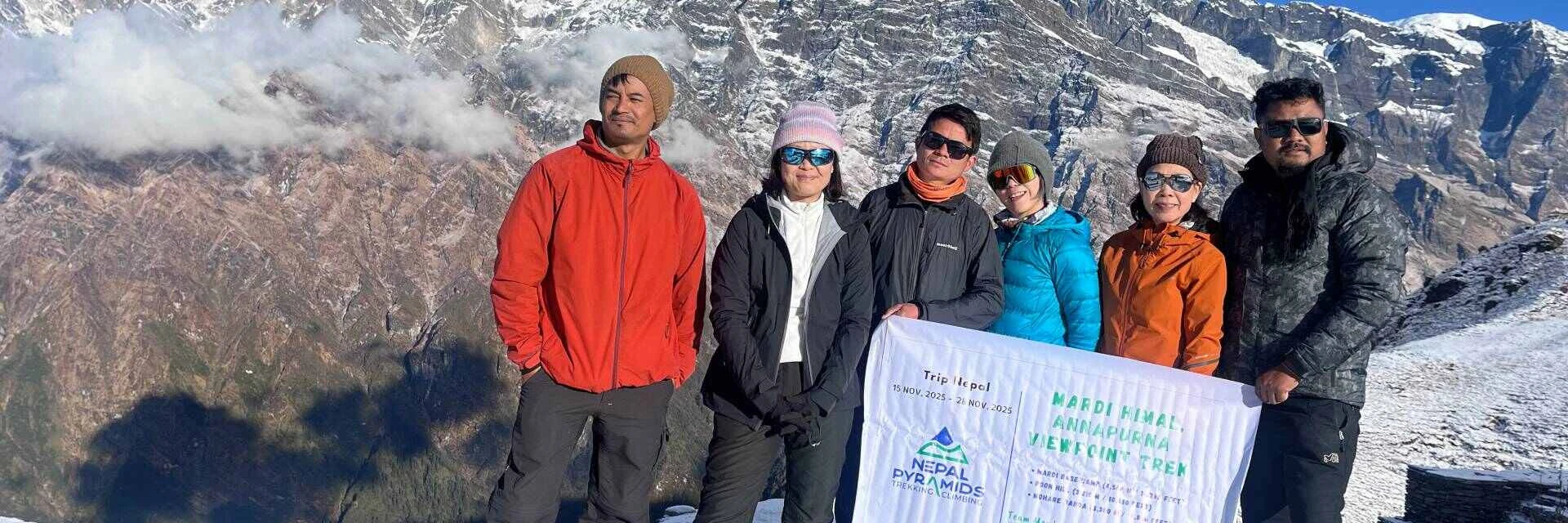
- The Annapurna Circuit, Annapurna Base Camp, Poon Hill, Ghorepani, and Mardi Himal treks all fall under the Annapurna Conservation Area Project (ACAP) permit system. The guide requirement is enforced at checkpoint entry points, including Birethanti and Besisahar.
Langtang National Park
- All Langtang Valley and Gosaikunda trek permits are issued exclusively through licensed agencies. There is no mechanism for a foreign trekker to obtain a Langtang National Park entry permit independently.
Manaslu Region
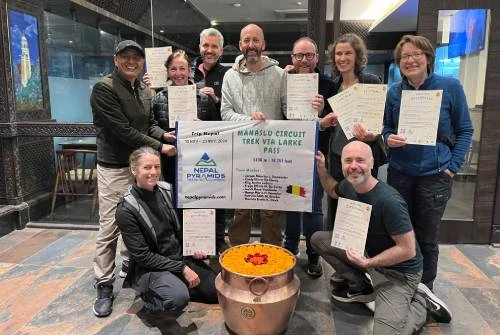
- The Manaslu Circuit is a restricted area requiring both a special permit and a licensed guide. It has always had stricter controls given its proximity to the Tibetan border.
Kanchenjunga, Upper Mustang, Upper Dolpo
- These are restricted areas with additional layers of permit requirements. In many of these zones, permits are not issued to solo travelers at all — a minimum group size of two foreign trekkers is required, along with a licensed guide and registered agency booking.
What Is Still Possible: Where You Can Trek Without a Guide
The rule is not a blanket ban across every trail in Nepal. There are legitimate options for trekkers who want more independence:
Short hikes and day walks near Kathmandu
Trails like the Nagarkot ridgeline walk, Balthali village trail, Champadevi hike, and Shivapuri National Park's lower sections (outside the core protected zones) can still be done independently. These do not require TIMS or a Conservation Area permit.
Hikes within Kathmandu Valley and Pokhara
The Sarangkot sunrise walk, Begnas Lake trail, and many popular viewpoint hikes around Pokhara remain accessible without a guide for foreign trekkers.
Partially relaxed restricted areas (2026 update)
A notable shift in 2026 is that Nepal has partially relaxed permit access for some restricted areas, making them easier for solo travelers to apply for — provided they still hire a licensed guide and book through a registered agency. This means a solo traveler can now plan a single-person trip to Upper Mustang or Tsum Valley without needing to find a trekking partner, whereas previously, a minimum group size was the barrier. The guide requirement, however, remains absolute.
Why Nepal Introduced This Rule
It is fair to ask: why did Nepal do this?
The government and tourism authorities cite several reasons:
- Safety: Nepal's mountain terrain is genuinely unforgiving. AMS (Acute Mountain Sickness),HACE (High Altitude Cerebral Edema), and HAPE (High Altitude Pulmonary Edema) are real risks that have claimed lives. Licensed guides are trained to recognize early warning signs, manage emergency descent, and coordinate with rescue services.
- Economic impact: The trekking industry employs hundreds of thousands of Nepalis — guides, porters, teahouse staff, and local vendors. The mandatory guide rule funnels more income directly into local communities that depend on trekking tourism.
- Environmental protection: High-traffic routes like the EBC and the Annapurna Circuit have faced serious waste management and trail degradation problems. Guided, agency-organized treks are easier to regulate and monitor for environmental compliance.
- Cultural preservation: In restricted areas near the Tibetan border, the guide requirement also ensures that sensitive cultural and border regions are accessed responsibly.
Whether or not one agrees with the policy, understanding why it exists helps trekkers engage with it more constructively — rather than looking for ways around it.
How to Trek Nepal Legally in 2026: A Practical Guide
Here is what a legal, well-organized Nepal trek in 2026 looks like:
1. Book through a registered agency
Only the agencies registered with Nepal's Government bodies and the Nepal Tourism Board can issue permits and assign licensed guides. Nepal Pyramids Trekking & Climbing is a fully registered agency that handles all permit processes on your behalf.
2. Confirm your guide's license
Your guide must hold a valid, government-issued license. Ask for their license number before the trek. Your agency should provide this without hesitation.
3. Secure travel insurance covering helicopter evacuation
This is now a permit requirement, not optional. Your insurance must cover medical evacuation up to at least 6,000 meters.
4. Carry physical permit copies
Checkpoint officers in remote areas may not accept digital screenshots. Always carry printed copies of your permits even if you also have the e-TIMS QR code on your phone.
5. Plan around peak seasons
March to May and October to November remain the best trekking windows. Permit processing and guide availability are more predictable when planned well in advance.
6. Ask about group-joining options
If you are a solo traveler concerned about cost, many registered agencies now offer group-joining services where solo trekkers are paired with others on the same route. This keeps costs low while maintaining full legal compliance.
Common Questions Trekkers Ask Us
Can I hire a local porter instead of a guide to meet the requirement?
A porter-guide who holds a valid government license can satisfy the requirement on some routes. However, a regular porter without a license does not. Always verify the license status before assuming your porter qualifies as a licensed porter-guide.
I trekked in Nepal independently five years ago, do the same rules apply?
No. The rules changed fundamentally in 2023 and have been reinforced in 2026. Experiences from 2019 or even 2022 do not reflect the current permit and guide landscape.
What if I just skip the checkpoints on a lesser-known trail?
Beyond the legal consequences, this creates serious safety exposure. In the event of an accident on an unregistered, guideless trek, emergency response is slower, and your insurance claim is almost certainly void.
Can Indian nationals trek solo in Nepal?
Indian nationals do not require a visa to enter Nepal, but the mandatory guide rule applies to all foreign nationals regardless of nationality when trekking in designated areas.
Our Experience at Nepal Pyramids Trekking & Climbing
We have been operating treks in Nepal for over a decade. Our team has guided trekkers through Everest Base Camp, the Annapurna Circuit, Mardi Himal, Langtang Valley, and the Mount Kailash Yatra in Tibet. We have watched the trekking regulation landscape shift significantly — and our direct relationships with the Nepal Tourism Board and TAAN mean we always have accurate, current information for our clients.
When you book with Nepal Pyramids Trekking & Climbing, we handle all permit documentation, assign licensed and experienced guides, and ensure your trek is fully compliant with 2026 regulations. You focus on the mountains. We handle the paperwork.
Final Answer: Is Trekking in Nepal Without a Guide Still Possible in 2026?
On major trekking routes:
No, trekking independently in the Everest region, Annapurna Conservation Area, Langtang, Manaslu, and similar destinations is not legally possible for foreign nationals in 2026 without a licensed guide booked through a registered agency.
On short local hikes:
Yes, day walks and trails outside protected areas near Kathmandu and Pokhara remain accessible without a guide.
Is solo travel still possible?
No, not without a guide. If you want to trek alone without a fixed group, that is perfectly fine. You simply need a licensed guide from a registered agency accompanying you. Many trekkers find this to be an excellent arrangement — personal pace, expert knowledge, and full legal compliance.
Nepal's mountains are extraordinary. The rules are stricter than they used to be, but the experience is still entirely possible — and arguably better when you have the right person walking beside you.
Ready to plan your 2026 trek with full peace of mind?
Contact Nepal Pyramids Trekking & Climbing for a custom itinerary, permit handling, and licensed guide assignment for any Nepal trekking route.
Quick Reference: 2026 Nepal Trekking Rules Summary
| Route / Region | Guide Required? | Permits! | Solo Allowed |
| Everest Base Camp | Yes | Yes (through Agency or self-issued at checkpost) | No |
| Annapurna Circuit | Yes | ACAP | No |
| Annapurna Base Camp | Yes | ACAP | No |
| Poon Hill / Ghorepani | Yes | ACAP | No |
| Mardi Himal | Yes | ACAP | No |
| Langtang Valley | Yes | LNP (through Agency or self-issued at checkpost) | No |
| Upper Mustang | Yes | ACAP + Restricted Area Permit | No (min 2 trekker) |
| Manaslu Circuit | Yes | ACAP, MCAP, Local Permit + Restricted Area Permit | No |
| Kanchenjunga | Yes | KCAP + Restricted Area Permit | No |
| Nagarkot / Balthali (day hike) | No | Not Required | Yes |
| Shivapuri (lower trails) | No | Not Required | Yes |
| Pokhara Area Day hike | No | Note Required | Yes |
Bottom line
- 2026: Guide is mandatory for foreign trekkers
- Solo trekking: Not allowed (legally)
- Booking through a registered agency is mandatory