Ghorepani Village History
Ancient History of Ghorepani: Why it is called Ghorepani
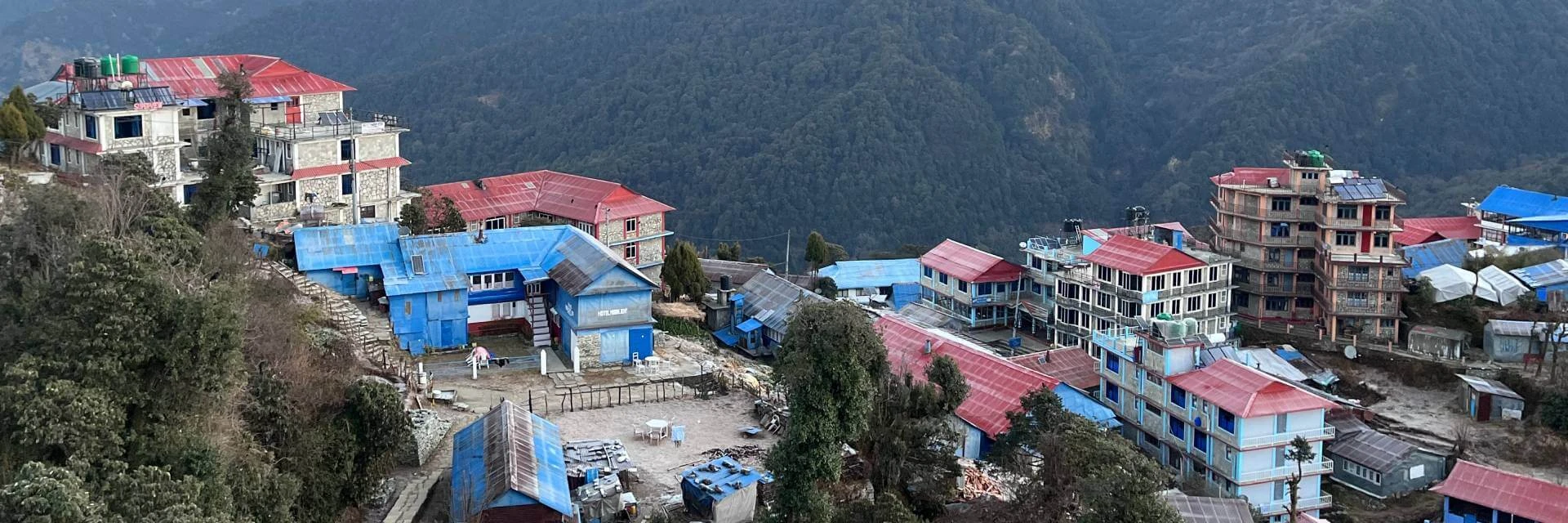
The ancient settlement of Ghorpani is situated at a height of 2,874 m / 9,429 feet. During the departed years, this spectacular ridge of Ghorepani served as a crucial meeting junction for the salt traders.
The history of Ghorepani village, thus, is deeply intertwined with the traditional trade routes that once connected various parts of Nepal and Tibet. It was significantly one of the most convenient sites for traders' reunions during the Salt Trade Era.
This beautiful settlement is aptly named GHOREPANI. Ghorepani was indeed Ghode-Pani. The name Ghorepani originates from two-syllable Nepali words: "Ghode" meaning horse, and "Pani" meaning water.
Over time, the name evolved from the original Ghode-Pani to the smoother, more easily pronounced Ghorepani that we know today.
Simple interpretation: 'GHORE or GHODE' means HORSE and 'PANI' means WATER - so literally Ghorepani means Horse - Water.
Ghorepani assumes such a unique name because it served as a place for traders to feed their animals (horses, mules, and donkeys) with fresh water. This beautiful ridge was an important stopover point. The traders from Nepal and Tibet and their mule caravans traveling between the lower and the trans-Himalayan region met at this point.
Legends speak of Ghorepani being a perfect terminal for the Barter System during ancient times. Ghorepani or Ghodepani then certainly served as an appropriate meeting point or junction where traders from both regions exchanged their merchandise.
Historically, this part of the region was said to have been inhabited by the indigenous people of GURUNG and MAGAR. This is the reason why we have Poon Hill, which in reality is Pun Hill, where PUN is one of the Magar sub-tribes. Both the Gurungs and Magars have a rich cultural history.
They are very well known across the globe for their bravery as soldiers in the British and Indian armies, as GORKHAS or GURKHAS. Even today, the traditions and cultural practices of this particular ethnic group are an integral part of life in the Ghorepani region.
A Historical Timeline of Ghorepani
To understand Ghorepani's journey from a remote trading post to a world-famous trekking stop, here is a simple timeline:
- 17th - 19th Century (Peak Salt Trade Era): Ghorepani served as a vital meeting point for Tibetan salt traders and lowland grain traders. Caravans of horses, mules, and donkeys passed through each season.
- 1950s (First Foreign Trekkers): After Nepal opened its borders, early explorers like Jimmy Roberts (who pioneered trekking in Annapurna) began passing through Ghorepani.
- 1970s - 1980s (First Tea Houses): Local Gurung and Magar families started building simple lodges to serve trekkers. Ghorepani slowly transformed from a seasonal trading camp to a permanent village.
- 1990s - 2000s (Poonhill Becomes Famous): Trekkers recognized Poon Hill as the best sunrise vantage point in the Himalayas that could be reached in a short period of time.
- Ghorepani Today: Ghorepani has over 50 lodges. Thousands of tourists, both international and domestic, visit Ghorepani every day now.
What Was Traded? The Barter System
The barter system at Ghorepani was not a random exchange between the Tibetan traders from the highland and Nepali traders from the lowlands. It followed a predictable pattern that benefited both sides:
It is believed that the traders made an exchange according to the following pattern below:
- Rice, millet, and maize were exchanged with Tibetan salt, preserved meat, and dairy.
- Lentils and spices with yak wool and raw sheep skin
- Iron tools and cooking pots with yak hides and yak wool
- Cotton cloth with Gold dust
Traders are believed to negotiate in quantities, for example, one sack of rice for half a sack of salt. The ridge of Ghorepani then acted as a border since it did not belong to any single kingdom or tribe. This made the business between the traders a safe and trusted meeting point.
Besides the meeting point, Ghorepani was also an ideal place to rest the horses and mules. It was also a place where traders fed their animals and watered them. Hence, they named this meeting point Horse Water.
Ghorepani Poon Hill, a Popular Short Trek Destination
However, in the mid-20th century, with the introduction of tourism in the Annapurna region, Ghorepani became a highlight. It began to attract trekkers and adventurers from around the world.
Today, thousands of international and domestic tourists visit Ghorepani and continue to be a favorite destination for all. If you are seeking a short hike or short drive to experience the breathtaking beauty of the Annapurna, Ghorepani is the best choice. This stunning ridge offers stunning mountain vistas with opportunities to witness the local way of life.
Planning to trek Ghorepani? Read our complete Ghorepani Poonhill Trek Guide for trail tips, permits, and best seasons.