History of Mardi Himal Trek
History of Mardi Himal Trek - First Ascent 1961 and How the Trail Opened
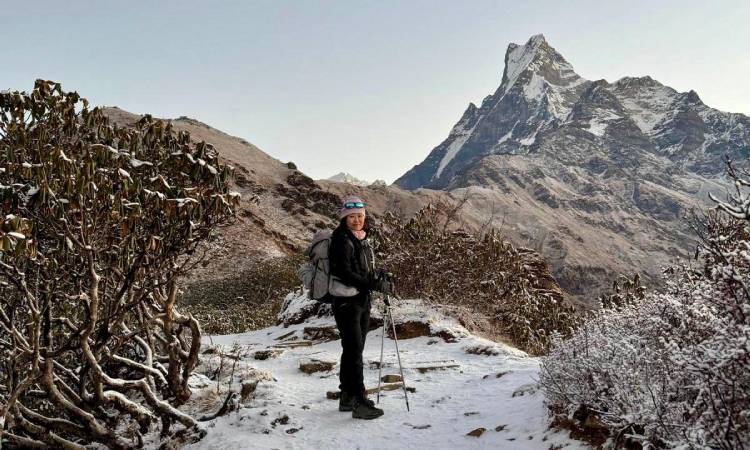
Mardi Himal is a small mountain peak that stands alongside the prominent Machapuchare Mountain (Mt. Fishtail). In fact, it looks more like a part of Fishtail Mountain but still holds great significance. The height of Mardi Himal is 5,587 m / 18,330 feet and looks pretty small alongside the majestic Machapuchare (6,993 m / 22,943 feet).
The Mardi Himal, as a trekking peak, was recognized only very recently. However, the stunning trek to the base of Mardi Himal was opened only in 2012. Before that, the area was restricted for trekking purposes and was opened only for mountaineering expeditions.
The history of Mardi Himal dates back to 1961, when Lt. Col Jimmy Roberts (J. O. M. Roberts) got special permission to explore far and wide in Nepal. The first recorded ascent of Mardi Himal was made in 1961 by a team of British mountaineers.
The team was led by Lt. Col. Jimmy Roberts, including Colonel Basil Goodfellow, British Chief Commander, and two Sherpa climbers, Ang Nyima and Kusang Sherpa. They climbed the peak via the southeast ridge, which is still the most popular route to the summit.
Over the years, eventually, the government of Nepal opened Mardi Himal and its route for trekking in 2012. Surprisingly, the Mardi Himal route didn't take long to get popular, it quickly gained popularity among trekkers. It delivered a less crowded and more off-the-beaten-path experience in the Annapurna region.
The trek to Mardi Himal Base Camp (4500 meters) takes about a week and offers stunning views of the Machhapuchhre and Annapurna mountain ranges. Now, it is considered one of the most spectacular trekking destinations in the Annapurna region, offering pristine mountain views.
Despite being a newly opened trekking destination, Mardi Himal today attracts thousands of trekkers each year. The trek is known for its diverse landscapes, including lush forests and high-altitude meadows, as well as magical views of mountains and the surrounding landscapes.
A Detailed Timeline of Mardi Himal: From Forbidden to Famous
The journey of Mardi Himal from an unknown peak to a celebrated trekking destination spans over 50 years. Here is the timeline:
- 1957 (The Machapuchare Attempt): Jimmy Roberts and Wilfred Noyce try to climb Machapuchare (Fishtail) via its north ridge. They stop just 50 meters from the summit, either due to local religious beliefs or Sherpa reluctance. The mountain is declared off-limits afterwards.
- 1961 (First Ascent of Mardi Himal): Jimmy Roberts returns with a different team, including Basil Goodfellow, Ang Nyima, and Kusang Sherpa. They climb Mardi Himal via the southeast ridge, a route still used today. At this time, no one thought of 'trekking' here.
- 1961 - 2011 (Closed Decades): For 50 years, Mardi Himal remained in the shadow of Annapurna Base Camp and Ghorepani Trek. The region then had no tea houses, no trails, no routes for regular travelers.
- 2012 (Trekking Route Officially Opens): The Government of Nepal finally opens Mardi Himal for trekking. It started with basic camping treks only, no lodges, and only a handful of trekkers traveled.
- 2015 - 2018 (Lodge Construction Boom): After the 2015 earthquake diverted trekkers away from damaged regions, Mardi Himal saw an opportunity. Local families built simple tea houses. Word spread on social media and soon got the attention.
- Mardi Himal Route Today: Mardi Himal sees thousands of trekkers annually. It now has comfortable lodges, clear trail markings, and even Wi-Fi at higher elevations. Every day, Mardi Himal is getting trendy.
Machapuchare (Mt. Fishtail) and Its Connection to Mardi Himal Trek
There is a beautiful history of how Mardi Himal came into existence. It dates back to 1957 when the British team led by Lieutenant Colonel Jimmy Roberts tried to climb Machapuchare Mountain. Machapuchare Peak, which is 6,993 m / 22,943 feet, is now very popularly known as MT. FISHTAIL. The shapely spire of Machapuchare is one of Nepal's most striking sights.
A small expedition led by Lieutenant Colonel Jimmy Roberts and Wilfred Noyce had attempted to climb from its north ridge in 1957. However, the expedition had to be abandoned within 50m of its summit, either out of respect for the locals or due to the Sherpas' refusal to carry on. After this attempt, the government prohibited further climbing on the mountain, so technically it remains unclimbed to date.
However, over time, climbers on their quest to Machapuchae Peak discovered an anonymous peak, which is now Mardi Himal. Mardi Himal was first climbed in 1961 by Colonel Basil Goodfellow, the Chief Commander of the British troops.
In this way, the forbidden mountain (Machapuchare) gave birth to an open alternative to the Mardi Himal Trek, and trekkers have been grateful ever since.
Who Was Jimmy Roberts? The Man Behind the First Ascent
No history of Mardi Himal is complete without understanding Lieutenant Colonel Jimmy Roberts (1916 - 1997), the father of trekking tourism in Nepal.
About Jimmy Roberts:
- British Gurkha Officer: Roberts served in the British Indian Army and later the British Army, commanding Gurkha regiments.
- First Trekking Agency Founder: In 1965, Roberts founded 'Mountain Travel Nepal', the country's first commercial trekking company.
- The Legacy: Many classic treks in Nepal, including parts of the Annapurna Circuit and the Everest region, were first scouted by Roberts.
- Why Mardi Himal? After being turned back on Machapuchare in 1957, Roberts remained fascinated by the area. In 1961, he chose Mardi Himal as an alternative summit.
- His Lasting Impact: The now-trending Mardi Himal trekking route is indeed built on the foundation he created.
Interesting fact: Roberts is also credited with the very commonly used term for lodge trekking as 'Tea House Trekking'.
Trekking Mardi Himal Today: What Has Changed Since 2012
If you trek Mardi Himal now, you are walking on a route that did not legally exist for trekkers just 13 years ago. Here is what has changed:
| Evolvement | In 2012 (Just Opened) | Now |
| Trail condition | Rough, unmarked, easy to get lost | Well-marked with blue and white signs, stone steps on steep sections |
| Accommodation | Camping only, no lodges | Ample tea houses along the route, including at High Camp (3,580m) |
| Mobile Network or WiFi | None | NTC and Ncell coverage at most places, Wi-Fi available until High Camp |
| Number of Trekkers | A few hundred per year | Several thousand per year |
| Permits | Special mountaineering permit only | Annapurna Conservation Area Permit (ACAP), same as Ghorepani |
| Best Season | Spring only (autumn was too risky) | Spring (March-May), Autumn (Oct-Nov), and now also Winter (Dec-Feb) |