Spring vs Autumn vs Winter: The Big Comparison
| Comparision | Spring (March - May) | Autumn (September - November) | Winter (December - February) |
| Weather | Mild to warm at lower elevations; afternoon clouds can develop | Often dry and stable after the monsoon, especially in October and November | Cold, with freezing nights at higher elevations |
| Mountain Views | Often excellent in the morning; haze or clouds may develop | Frequently clear, especially after early October. | Can be exceptionally clear on suitable days |
| Scenery | Blooming rhododendrons and green, colorful hills and valleys. | Golden fields, harvest landscapes, and clear skies | Snow-covered landscapes and quiet villages |
| Crowds | Busy, highest in April and May. | Busy, highest in October. | Generally quieter on many routes |
| Costs and Bookings | Demand can be high on popular routes | Busy, highest in October: popular lodges, routes, and flights can fill up early | Less crowded, little savings on some routes, easy booking. |
| Cultural Experience | Spring festivals and local celebrations | Festival season: Dashain, Tihar, and harvest activities. | Quieter village life and winter traditions |
| Climbing | Main season for major spring Himalayan expeditions |
Becoming another important season for autumn expeditions for selected peaks. | Limited options; difficult and demanding, but winter expeditions are still becoming popular |
| Main Challenges/Risks | Afternoon clouds and busy trails | Crowds, early-autumn monsoon disruption | Extreme cold, snow, and potentially closed high passes |
| Best suited for? | Nature and mountaineering | Classic treks and photography | Solitude and shorter treks |
Spring vs Autumn Trekking in Nepal: Which Is Better?
Traditionally, both Spring and autumn are the two most popular trekking seasons in Nepal. However, these two seasons offer different experiences.
Spring: Vibrant, Colorful Landscapes and Warmer Temperatures:
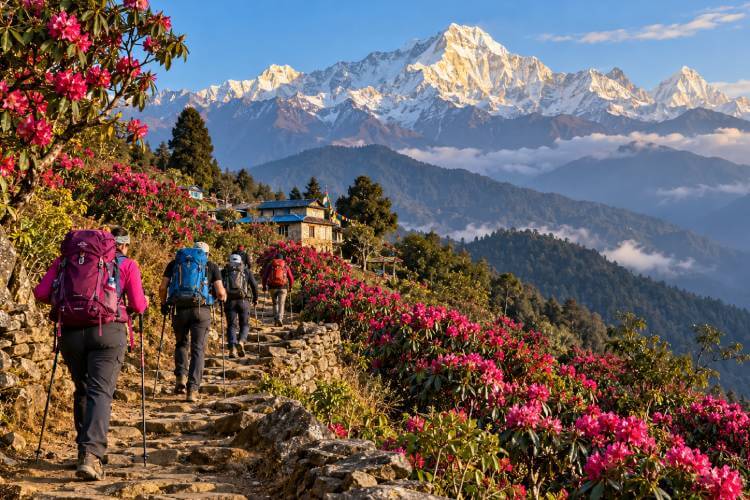
After the winter chill, the colorful season of spring emerges starting from March to May. Spring brings comfortable temperatures, vibrant valleys, and rhododendron flowers painting the hills. This is when trekkers and mountaineers start returning to the mountains.
However, as spring advances, due to drier-season haze, smoke, and afternoon clouds may build up on the horizon. This sometimes obstructs distant mountain panoramas and can even cause delays and cancellations of domestic flights.
Autumn: Clearer Skies and Classic Himalayan Scenery
Autumn season's greatest advantage is pure visibility.
Once the monsoon withdraws, the atmosphere becomes cleaner, and the Himalayan skyline often appears exceptionally sharp. October and November are especially popular for Everest Base Camp, Annapurna Circuit, Manaslu Circuit, and other established trekking routes.
Autumn also offers comfortable walking weather, although nights become increasingly cold at higher elevations.
Its main disadvantage? Popular trekking routes and teahouses can be considerably busier than in spring.
Spring or autumn: our recommendation
- Spring for rhododendron forests, warmer temperatures, and colorful scenery.
- Autumn for clearer skies, great mountain panoramas, photography, and classic high-altitude trekking.
NOTE: For Autumn, late October or November is recommended because early autumn requires post-monsoon conditions study and assessment.
Autumn vs Winter Trekking in Nepal: Clear Skies or Quiet Trails?
Both autumn and winter seasons in Nepal can provide remarkable mountain visibility. With the change in weather patterns in the Himalayas due to Global Warming, autumn and winter are becoming more popular than spring these days.
October and November bring favourable conditions for trekking, peak climbing, and high-altitude routes. Being a festival season, it offers clear blue skies, popular festival celebrations, cultural experiences, and clear views.
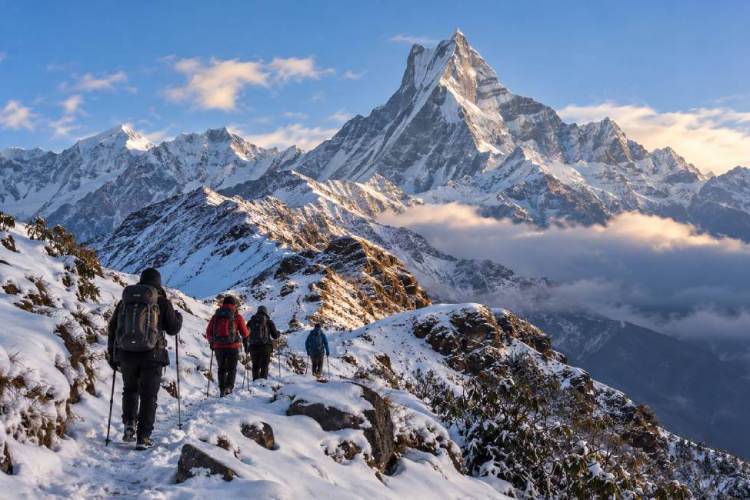
By December, winter approaches with falling temperatures. Freezing nights become more common, but the winter season (December - February) delivers great weather for trekking. Clear winter mornings give you stunning mountain panoramas, often without the crowds.
The advantage of winter trekking in Nepal is fewer crowds, great visibility, and tranquility. However, appropriate clothing, suitable accommodation, and carefully selected routes are essential.
Should you choose Autumn or Winter?
- Autumn is generally better for all treks, including longer high-altitude adventures and peak climbing.
- Winter is best for average altitude trekking like Mardi Himal or Annapurna Base Camp. But winter trekking is getting popular even for high-altitude treks these days.
NOTE: Winter is still not suitable for demanding high-pass itineraries and inexperienced trekkers attempting extreme elevations.
Spring vs Winter Trekking: Crowd or Solitude?
Spring and winter seasons in Nepal sit at completely opposite ends of the trekking spectrum. One is filled with lively crowds, busy trails, colorful blooms, and the other empties the trails with dry, chilly temperatures, clear skies, but absolute solitude.
Comparing them, in reality, is like recognising two different moods of the same mountains. Choosing between them is not about which season is better, but whether you are looking for lively mountain trails or enjoy solitude and keep the grand Himalayas all to yourself.
- Spring season brings longer daylight hours, blooming flowers, colorful landscapes, and increasingly accessible mountain trails.
- Winter season offers great visibility but cold, crisp mountain air, snow-covered scenery, and a quieter atmosphere.
For first-time visitors, if you are not used to with the mountain chill factor, the spring season offers more comfortable conditions.
Returning visitors who have already experienced Nepal's busy trekking seasons can opt for the winter season for an equally fascinating side of the country.
Spring vs Autumn vs Winter for Mountain Climbing in Nepal
| Climbing Consideration | Spring Season | Autumn Season | Winter Season |
| Major Himalayan expeditions | Main season for Himalayan Expeditions | Possible on selected routes | Highly demanding |
| 8000+ meters peaks | Offers perfect summit windows | Possible on selected Peaks | Extreme conditions |
| 7000+ and 6000+ meters peak | Very favorable | Often favorable | Doable but extreme temperatures |
| Technical Conditions | Snow and weather vary | Conditions vary by peak | Extreme cold, snow, and wind |
| General Recommendation | Strongest major expedition window | Excellent selected climbing opportunities | Specialist expeditions only |
Our recommendation: For any Himalayan expeditions in Nepal, spring is generally the first season to consider. Autumn season also deserves serious consideration, as local mountaineers gradually prefer Autumn for many Himalayan expeditions as a favourable season.
What About Winter Expeditions in the Himalayas?
Winter Himalayan expeditions are possible, and climbers such as Nims Dai (Nirmal Purja) have undertaken high-altitude winter expeditions. However, these extreme winter climbs are for highly experienced mountaineers with advanced technical skills only. His winter climbing achievements should not be confused with ordinary winter trekking or beginner-friendly peak climbing.
What About Monsoon Trekking in Nepal (June - August)?
The monsoon season in Nepal is generally not an ideal season for trekking or climbing. Monsoon in Nepal is gradually extending from June into September and is comparitively differen to the rest of the seasons.
This season in Nepal brings heavy rainfall, which in turn can bring:
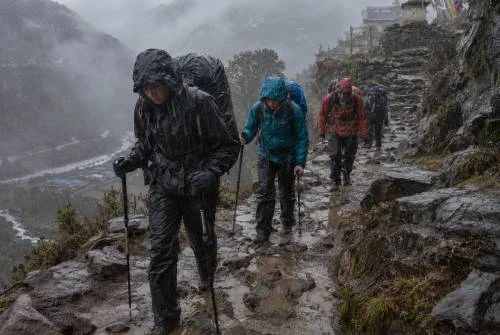
- Slippery trails, leeches, and reduced mountain visibility.
- Landslides, flash floods, and swollen rivers.
- Road closures, flight delays, and disrupted itineraries.
- Increased uncertainty in remote mountain areas.
During this period, there are limited exceptions when it comes to trekking in Nepal. Rain-shadow destinations such as Upper Mustang and Upper Dolpo, and parts of Manang, can be trekked during monsoon season.
However, even trekking to these areas can be affected by disrupted roads due to landslides, river crossings, flight cancellations, or other weather-related circumstances.
What About Early Autumn (September and Early October) Trekking in Nepal?
Although September is classified as autumn, it does not always provide the dry conditions for mountain adventures. Due to the late start of the monsoon and extending further, late monsoon rainfall can continue till early October. This leaves mountain trails slippery and increases the possibility of landslides, flash floods, swollen rivers, road disruptions, and flight delays.
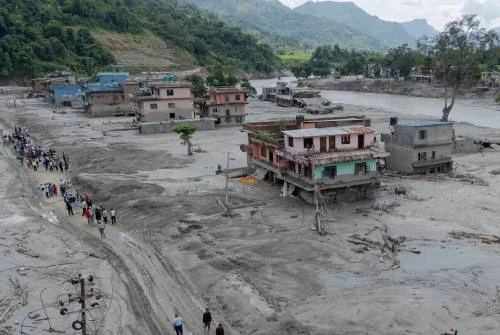
The tragic floods across Nepal in 2026 demonstrated why this early autumn, which is the monsoon transition period should not be underestimated. Some routes may still be feasible and safe during this period, but river valley treks need serious risk assessments.
Autumn travelers are to analyze their routes or consider mid-October to November for their autumn treks that offers a more reliable trekking window than early Autumn.
Should You Choose Spring, Autumn or Winter Seasons?
| Your Priority | Recommended Seasons |
| Clear Himalayan photography | Autumn or Winter |
| Blooming rhododendron forests | Spring, especially March - April |
| Everest region trek | Spring or autumn (doable in winter) |
| Annapurna region trek | Spring or autumn (doable in winter) |
| Everest and major mountains expeditions | Spring |
| Island Peak, Mera Peak, Lobuche, or other 6000m peaks | Spring or autumn |
| Fewer crowds and peaceful trails | Winter |
| Comfortable first Himalayan Trek | Spring or autumn |