Why You Should Not Trek Nepal in Monsoon or Early Autumn: What the 2026 Floods Reveal
The Himalayan trekking season is certainly changing faster than travelers realize. The devastating floods in Rasuwa and Manaslu in 2026 are a serious warning that September and early October are not safe months for trekking in Nepal. This Early-Autumn season is gradually becoming unsafe in the Himalayan valleys that are very unpredictable now.
Imagine you spent months preparing for your Nepal Himalayan dream adventure. With all excitement, you booked your flights, underwent pre-physical training, bought equipment, and finally arrived in Nepal. The beautiful journey begins, but somewhere in an unknown valley, a landslide happens, a swollen river destroys bridges, and you can't go anywhere further or back.
Now you and the rest of the group are stranded in a remote valley with just hope. Besides, poor visibility or terrible weather prevents helicopters from reaching you.
Sadly, this is happening in a real-life scenario; it is not something we are imagining.
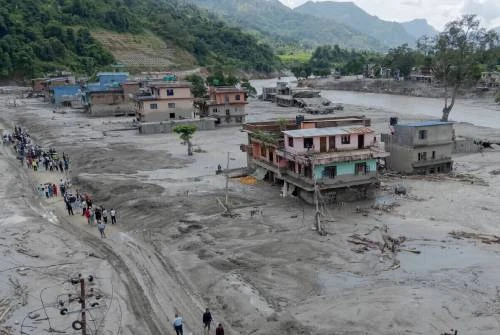
On October 11, 2026, a devastating flash flood along the Budhi Gandaki River disrupted the Manaslu trekking route. The flood damaged bridges and trails, leaving more than 100 foreign trekkers and hundreds of local citizens stranded in the Jagat village area. This Budhi Gandaki River flash flood in the Manaslu region came seven weeks after the most devastating tsunami floods in Rasuwa district on August 26, 2026. The most tragic and destructive Rasuwa flood took the lives of thousands. These flash floods in Rasuwa, Annapurna Circuit and Manaslu suggest that the monsoon had not officially left Nepal.
These 2026 disasters in our country have raised urgent questions about climate change and the changing Himalayan environment. Nepal's traditional trekking seasons are being affected and are undergoing a huge change that most of us don't realize. This ignorance is eventually crafting the risks that travelers from different parts of the world are to face.
For decades, September has been marked and marketed as the beginning of Nepal's autumn trekking season. But due to Global Warming, the traditional seasons of Nepal have already been shaped differently. The monsoon has extended as far as early October, and makeing the early Autumn risky. Risk Assessment during early autumn has become a priority.
NOTE: This article is not intended to discourage anyone from visiting Nepal. It is intended to help you visit at the right time.
Here is what the 2026 disasters reveal about monsoon trekking, climate change, glacial lakes, vulnerable trekking routes, and how to plan a safer Himalayan adventure.
1. Nepal's Monsoon Is Changing: The Hidden Risks of Nepal's Early Autumn Treks
Why September and Early October Demand Caution:
Nepal receives most of its annual rainfall during the summer monsoon. According to the 2003 record, the monsoon traditionally began in June and withdrew around the end of August or early September. However, the monsoon withdrawal is not happening in a traditional cycle now; in fact, it is extending further until early October.
For years, we believed that the rain stops in early September and the mountains are safe again. But this belief is now out of date. Climate change has put river valleys, mountain regions, and high glacial lakes at risk. We ask adventure travelers from around the world to take caution while choosing the monsoon or early Autumn season for your Himalayan adventure.
Due to this monsoon extension, international travelers get confused and think September is the beginning of the autumn trekking season. Many trekking agencies sell their trekking packages from early September, creating the impression that the wet season has ended.
But the reality is more complicated.
According to Nepal's Department of Hydrology and Meteorology, the monsoon withdrawal date is around October 4 or later.
The 2026 Nepal Monsoon Pattern
- The monsoon reached Nepal on 19 June, which is a late start.
- It began to withdraw from 4 October.
- It did not completely withdraw until October 13, and it fully left the country on 14 October.
- In the late withdrawal period, the Himalayan region received more rain than the Tarai and hill regions.
This means the first two weeks of October were still part of the monsoon withdrawal period in Nepal.
Why rainfall after the summer monsoon is particularly dangerous
The problem is not the amount of rainfall Nepal receives every monsoon. We are to be aware of the fact that by September (during the gradual monsoon withdrawal period), mountains, hills, and the surrounding soil have absorbed so much water and moisture. All these will create unstable ground, and any new rain or an earthquake will trigger heavy landslides.
The unexpected hazards travelers may encounter:
- Landslides: On trekking trails, settlements, or mountain roads blockade.
- Flash floods: Increased river discharge.
- Washed Trekking Trails: Can keep you stranded in the remote valley.
- Damaged bridges: Destroy essential river crossings.
- Road blockages: Prevent vehicle evacuation.
- Poor visibility: Prevents helicopter rescue or any mountain operations.
For trekkers following narrow Himalayan river corridors, a single destroyed bridge can disrupt an entire expedition.
What this means for travellers: For trekkers trekking through the narrow Himalayan river corridors, such incidents can disrupt an entire expedition and can put your life at stake. It also means September and early October can still be unstable. Be aware that the monsoon in Nepal now lasts till early October.
Does climate change mean Nepal's monsoon always ends later?
Not necessarily.
However, Climate Change is happening, and witnessing the affects of it in the Himalayan regions. We are also witnessing how Himalayan trekking is becoming risky at certain times of the year due to this. Climate change is affecting Himalayan temperatures, precipitation patterns, glaciers, and mountain hazards.
However, just because we had a few delayed monsoon withdrawals in Nepal, we should not interpret this as proof of a permanent trend.
Looking at the pattern of the last 5 years, what travelers need to know is that the traditional trekking seasons have indeed altered to some extent. The traditional seasonal patterns are no longer sufficient and valid for making safe adventure decisions.
Now, a crucial time has come when September or early October itineraries should be judged by studying the monsoon pattern.
- Nepal Pyramids Advice: Treat September and early October as a monsoon transitional period. For major river-valley treks, consider late October or November or Winter instead.
2. What The 2026 Floods in Rasuwa, Annapurna Circuit and Manaslu Showed Us: A Warning for Himalayan Trekkers
August and Early Autumn 2026 have been a tragic time for Nepal. Three of Nepal's best-known trekking regions experienced serious flooding, landslides, and infrastructure damage. These events remind us why mountain weather, trail conditions, and local safety information matter.
Here is the timeline, based on reports available as of 17 October 2026.
| Date | Place | What Happened |
| 26 August, 2026 | Rasuwa, Bhote Koshi and Trishuli valleys | The most devastating tsunami flash flood, causing extensive loss of life and infrastructure - thousands are expected dead. |
| 6 September, 2026 | Therang Khola, near Namrung (Manaslu Circuit) | A pre-dawn flood damaged suspension bridges in the Namrung area and disrupted trekking access along the Manaslu Circuit route. |
| 24 - 28 September, 2026 | Central Nepal | Intense late-monsoon rainfall triggered widespread floods and landslides, damaging roads, homes, and bridges. 304 landslide incidents nationwide were reported during this period. |
| 27 September, 2026 | Chame, Marsyangdi Valley (Annapurna Circuit) | Debris partially blocked the Marsyangdi River, causing flash floods that damaged houses, bridges, roads, and trekking routes. Residents evacuated to safer areas, and several trekkers were stranded. The village of Chame was highly affected. |
| 11 October, 2026 | Budhi Gandaki, Gorkha (Manaslu region) | Flash floods destroyed bridges, villages, and trekking infrastructure. More than 100 foreign trekkers were reported stranded. |
The disasters of 2026 demonstrate that Himalayan floods do not always require heavy rainfall or the outburst of glacial lakes. Even in perfectly sunny weather, a glacial avalanche or massive landslides in the river valley can trigger such a catastropic flashfloods.
August 26, 2026: The catastrophic Rasuwa flood
On August 26, a massive avalanche occurred high in the Lhende Khola or Bhotekoshi near the Nepal–China border. This generated a powerful flood and debris flow that travelled through the Bhote Koshi and Trishuli river systems. This Rasuwa Tsunami Flashflood is considered one of the most devastating in the history of Nepal's natural calamities.
The disaster affected communities, transport infrastructure, and settlements across several districts, including Rasuwa, Nuwakot, and Dhading. Roads, bridges, hydropower infrastructure, and other essential facilities suffered extensive damage.
The August 26, Rasuwa Flood caused catastrophic loss of life and widespread destruction. The recorded death toll by September 19, 2026, was around 1,411 casualties, with 5,875 people still missing.
September 6, 2026: Flood damage near Namrung, Manaslu Route
Less than two weeks later, flooding along Therang Khola and the Budhi Gandaki River near Namrung caused further destruction in the Manaslu region. This destroyed bridges, homes, and local hydropower facilities.
The incident disrupted trekking trails and affected movement on the Manaslu trekking route just as the autumn tourist season was beginning. Then, the Government had to stop issuing any further permits for Manaslu Trekking until further notice.
For trekkers, this was a risk and a big blow to travelers who were dreaming of trekking in the remote valleys of Manaslu. Many treks had to be diverted to other safe trekking destinations.
September 27, 2026: Devastating floods hit Chame and disrupt the Annapurna Circuit Trek
On September 27, swelling rivers and flash floods devastated Chame, the district headquarters of Manang. It caused extensive damage to houses, roads, and bridges. Shortly after, the flood from Ghatte Khola (river) partially blocked the Marsyangdi River and caused water levels to rise dangerously. It submerged a major bridge connecting Chame to Upper Manang.
This disaster severely disrupted the Annapurna Circuit Trek. Many trekkers had to abort the trek, and much like in Manaslu, the Nepal Authority had to stop issuing any further permits for the Annapurna Circuit Trek. It was really sad to see that such a natural disaster affected trekking routes, disrupting movement at the beginning of the early autumn trekking season.
October 11, 2026: More than 100 foreign trekkers stranded in Manaslu
Then came another serious disaster.
On October 11, a flash flood swept through the Budhi Gandaki corridor in Gorkha. Much like the Rasuwa flooding, it was a debris flash flood that was devastating and tragic. This Budhi Gandaki flood damaged trekking infrastructure, bridges, homes, and other property.
Initial reports suggested that a landslide had obstructed the river, creating a blockage that eventually flooded along the Budhi Gandaki Corridor. This was the second major, disastrous, and tragic flash flood after the Rasuwa flooding.
More than 100 international trekkers were reported stranded in Jagat. Other travelers were affected around Lokpa and Chhekampar in the Tsum Valley area. Hundreds of locals fled to safety and were stranded.
However, the rescue teams, local authorities, and security agencies coordinated evacuations and safe movements during these calamities.
Lessons Learned from Nepal’s 2026 Flash Floods: A Wake-Up Call for Himalayan Tourism
The devastating floods in Rasuwa, Annapurna Circuit, and Manaslu Route showed how quickly trekking routes, bridges, communities, and tourism livelihoods can be disrupted.
The biggest lesson: In Himalayan tourism, safety must come before profits and adventure.
For Travel and Trekking Agencies
- Never prioritize bookings, itineraries, or profits over human safety.
- Verify weather, trail conditions, and access before departure and throughout the trek.
- Do a risk assessment.
- Develop evacuation plans, alternative routes, and emergency communication systems.
- Train guides in disaster preparedness, first aid, and emergency decision-making.
- Be transparent with clients about risks, cancellations and refunds.
For Trekkers and Travelers
- Understand that mountains are beautiful but unpredictable.
- Follow weather warnings and respect guides' safety decisions.
- Carry suitable insurance, emergency supplies and communication equipment.
- Be flexible with itineraries; turning back is wisdom, not failure.
For Government and Tourism Authorities
- Establish reliable early-warning systems in trekking corridors.
- Improve monitoring of glacial lakes, landslides and river blockages.
- Strengthen bridges, trekking trails and emergency evacuation infrastructure.
- Ensure coordination among government agencies, local communities and trekking operators.
- Publish timely, verified, route-specific travel advisories rather than general warnings.
For Local Communities
- Strengthen community-based disaster preparedness.
- Protect traditional knowledge of mountain hazards.
- Identify safe evacuation routes, shelters, and communication points.
- Stop building teahouses and luxury hotels along the river corridors.
Neither the Nepal Government nor we can stop natural disasters from happening. However, better preparedness, timely warnings, responsible decisions and stronger coordination can reduce their consequences.
The future of Nepal's tourism should not be measured only by how many trekkers we attract, but also by how safely we bring them home.
"The floods of 2026 remind us that responsible tourism is not simply about reaching a destination; it is about protecting lives, respecting nature, and building resilience together"